A Form in Your Own Language Can Open the Door to Everyday Life
Real teams, real workflows
Write your own FormHug story
It started with one simple form. See what yours could become.
An Indian service company based in Saudi Arabia has built its business around a practical question: can the workers it serves understand what they are being asked to do?
It is hard to ask for help when the first question arrives in a language that is not your own.
That difficulty can appear in ordinary moments: trying to order the spices that make food taste like home, understanding what information is needed for medical insurance, or explaining that you need to see a doctor.
For the company, these are not separate edge cases. They are the business.
The company uses FormHug to give workers a familiar way into each service. Its forms are written in Indian languages the people it supports can read more comfortably. Behind those forms, staff coordinate orders, insurance, medical appointments, and renewals.
One product supports almost the entire operation. But the more important story is why that works: every service begins by making the first question understandable.
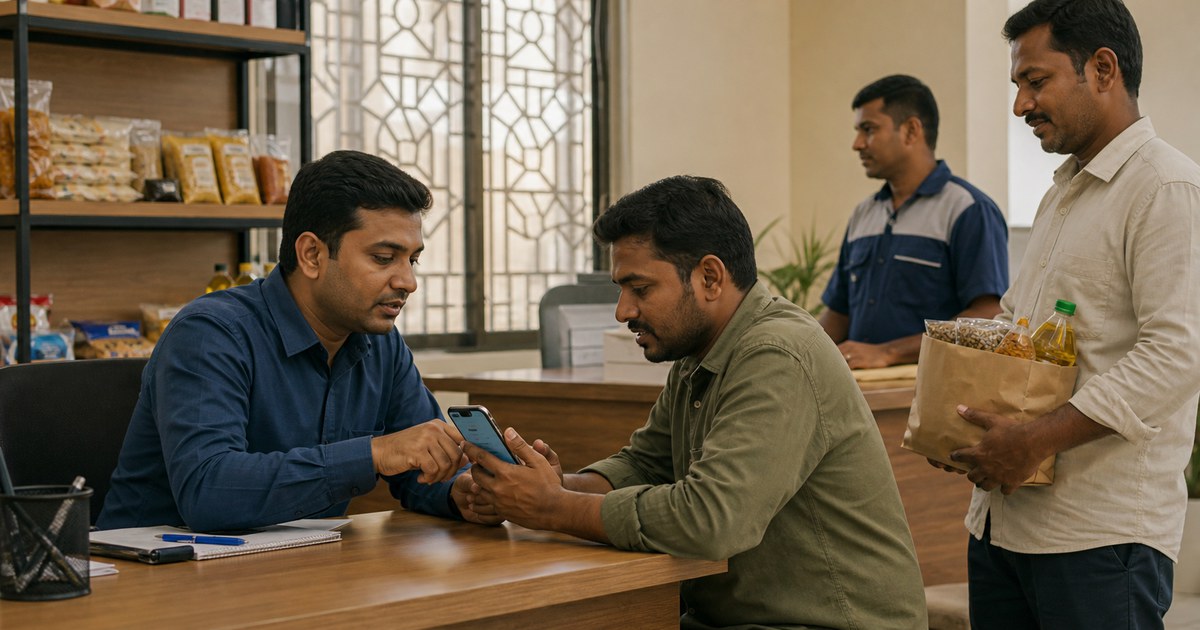
The company asked not to be named. Partner details and original form titles have been generalized; the AI-generated header image does not depict the customer.
The First Barrier Was Not the Service. It Was the Language.
A worker may know exactly what they need and still struggle to enter the process.
An unfamiliar-language form turns a simple request into a test. Which field is required? What does this choice mean? Am I giving the right information? When the subject is healthcare or insurance, uncertainty carries more weight than inconvenience.
The company chose not to make workers adapt to that friction. It designed the front of each workflow around the language of the person asking for help.
At FormHug, we believe forms should meet people in their own language. Translation is not a finishing touch applied after the workflow has been built. It determines who can enter with confidence in the first place.
A readable form cannot remove every difficulty of living and working abroad. It can remove one unnecessary barrier at the exact moment a person is trying to move forward.
Three Needs, One Familiar Way In
The company’s services look different from the outside. One involves food, another insurance, and another healthcare. For the worker, however, they now share a familiar beginning: open a link, read in a comfortable language, and explain what is needed.
A taste of home
Living abroad can make familiar ingredients unexpectedly important. Curry blends, spices, and other Indian food products are everyday goods, but they also carry memory, routine, and comfort.
Workers can use an online form to request the items they want. Instead of explaining a list by phone or relying on someone else to translate it, they can make the request themselves. The company’s staff receive a clear order they can review and fulfil.
The form makes a small transaction easier. The service makes daily life feel a little more familiar.
A clearer beginning for medical insurance
The company also helps workers arrange medical insurance in Saudi Arabia. A local-language form collects the information its staff need to support the purchase process.
The boundary is important: the form is not the insurance policy, and FormHug does not make a coverage decision. It gives the worker a readable starting point and gives staff a structured record from which to continue.
When the subject is consequential, understanding the first step is part of being treated with care.
A way to ask for a medical appointment
When a worker becomes ill, the company can help coordinate with a local healthcare provider. Through a local-language form, the worker requests an appointment and supplies the initial information the service team needs.
The form does not diagnose the illness or replace the medical provider. Its job is more human and more modest: make it easier to say, clearly, I need help.
Staff then take over the coordination with the company’s medical partners.
A Submission Is a Beginning, Not an Ending
Insurance revealed another kind of gap. Collecting the initial information was only the first part of the relationship. Coverage would eventually need to be renewed, and the business needed to bring that responsibility back to the right staff member at the right time.
FormHug reminders make the upcoming renewal visible. When attention is needed, a member of staff is notified. That person contacts the worker and arranges what comes next.
The reminder does not renew a policy by itself. It does something more useful for this workflow: it keeps a human promise from disappearing into time.
The company says this follow-up has significantly improved its renewal rate, although it has not shared a public percentage.
“With just one FormHug product, we can support almost all of our company’s business. Insurance renewals were a major challenge. FormHug’s reminders notify our staff in time, and we then contact the worker and arrange the renewal. This has significantly improved our renewal rate.”
— Service company operating in Saudi Arabia, name withheld; translated from customer feedback
This is one of the ideas we keep returning to at FormHug: a response should not stop at submission. The value of structured information is what it allows a person or system to do next.
One Form Layer, Almost an Entire Business
The same FormHug product supports a connected service journey:
Familiar goods → insurance support → medical appointments → renewal follow-up
For workers, each need begins in a language they can understand. For the company, each submission arrives as a structured request that staff can act on. Reminders make sure time-sensitive work can return when it matters.
The consistency is quiet but powerful. A worker does not have to learn a different way to ask for every kind of support. The company does not need a separate intake system for every service it adds.
Language makes the door accessible.
Structure helps the work move through it.
Reminders help the relationship continue.
Access Begins With Being Understood
It would be easy to describe this customer as a company using multilingual forms for three business processes. That would be accurate, but it would miss the point.
For the people on the other side of these forms, the process may mean finding an ingredient connected to home, beginning medical coverage, or getting help when they are sick.
The form is small compared with the service that follows. Yet it shapes the first moment of every one of those journeys.
For this company, multilingual forms are not localization at the edge of the business. They are how the business says: you can begin here, and you can begin in your own language.

Written by
FormHug TeamProduct, research, and form automation team
The FormHug Team brings together product builders, workflow researchers, and form automation practitioners who study how people collect, route, and act on information online. Our guides are based on hands-on product testing, template analysis, customer workflow patterns, and deep experience with forms, surveys, quizzes, AI-assisted creation, integrations, and results sharing.