Agent-Ready Forms Are Not Just AI-Generated Forms

Create with AI
Describe the workflow and get a form draft
Use FormHug to create forms from prompts, then share, automate, and reuse the structured responses.
The first wave of AI form builders made a simple promise: describe the form you want, and AI will generate it.
That is useful. It saves time. It lowers the blank-page cost of building a survey, quiz, registration form, intake form, or feedback form.
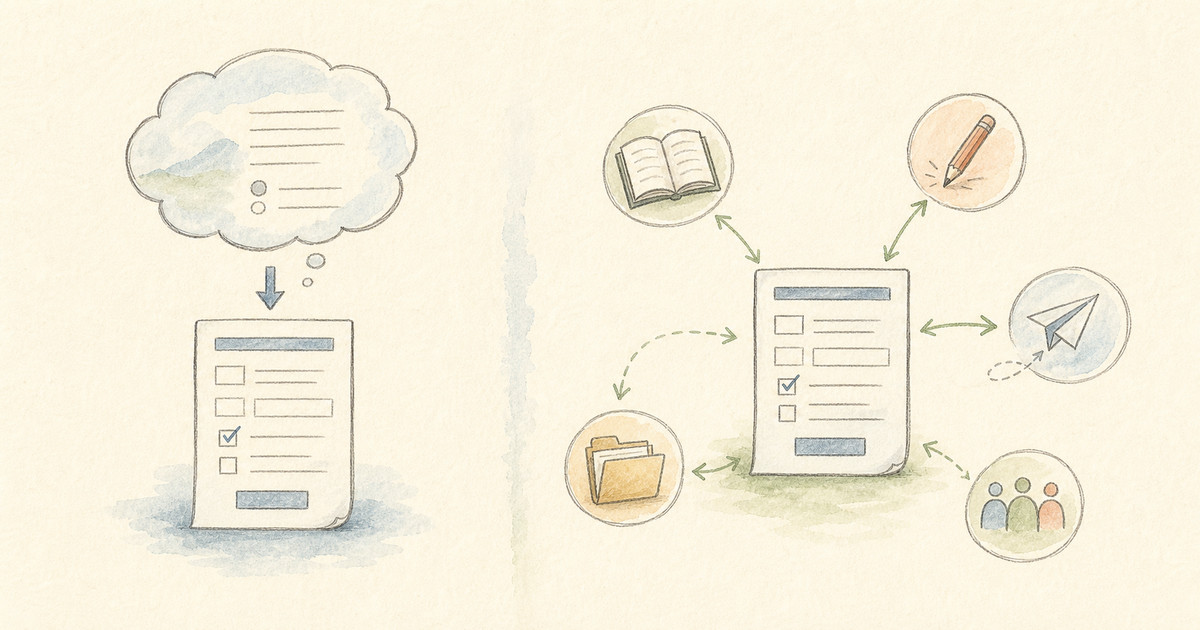
But the more we build FormHug, the more obvious this becomes: generation is only the beginning. A form that an AI can create is not automatically a form that an agent can understand, manage, fill out, submit, or use in a real workflow.
That difference matters because agents are no longer only helping people make things. They are starting to participate in the work around those things. They create the form, inspect it, change it, read the submissions, and sometimes act as the user’s hands when a form needs to be filled out.
That is the product thesis I keep coming back to: an agent-ready form is not just an AI-generated form. It is a form with a second interface: one for agents to read and act on, while humans stay in control.
Generation Is a Feature. Readability Is Infrastructure.
AI generation answers one question: “Can the agent make the form?”
Agent readiness asks a bigger set of questions:
- Can the agent inspect the form structure?
- Can it tell which fields are required?
- Can it understand choice values, scoring, ranking, file uploads, and result behavior?
- Can it update the form without breaking it?
- Can it submit a response using the same rules a human respondent would follow?
Those questions are less flashy than “generate this form from a prompt,” but they are the questions that decide whether a form builder can become workflow infrastructure.
Internally, we have been thinking about this as the Read, Write, Submit loop.
An agent-ready form system should let agents read forms, write or manage forms, and submit forms. Creation is only one part of the write side. The rest of the loop is where the form becomes useful inside real work.
A Form Should Have a Human View and an Agent View.
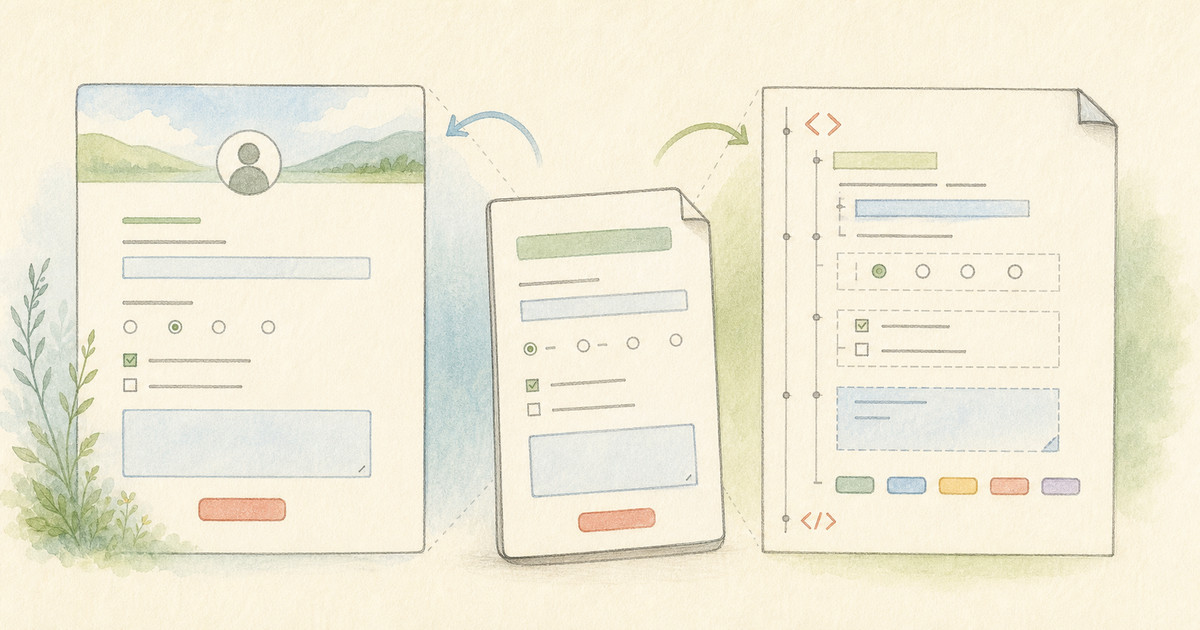
A public form page is designed for people. It should be clear, polished, mobile-friendly, and easy to complete. I do not think the AI era makes that less important. If anything, it makes the public surface more important, because the agent can only continue the workflow after a real person decides the form is worth trusting.
But agents need a different view.
They do not need gradients, animations, or a browser DOM they have to guess their way through. They need structure: title, description, fields, required flags, field types, choice values, validation rules, and submission formats.
That is why we made FormHug forms expose a markdown version of a public form. If someone sends a form link such as:
https://formhug.ai/f/NXN8qp
an agent can read the structured markdown view at:
https://formhug.ai/f/NXN8qp.md
That .md view makes the form easier for agents to inspect without scraping the visual page. It gives the agent a cleaner representation of the same object a human sees in the browser.
It is a small interface decision, but I think it points at a larger product principle: every important workflow object should have both a human-readable surface and an agent-readable surface.
Agents Should Be Able to Submit Forms Too.
Most conversations about AI form builders focus on form owners. A user asks an agent to create a form, update fields, read submissions, or summarize responses.
That is important, and it is a big part of FormHug MCP for AI agents. An agent should be able to help the owner manage their own forms.
But there is another side of the workflow: the respondent.
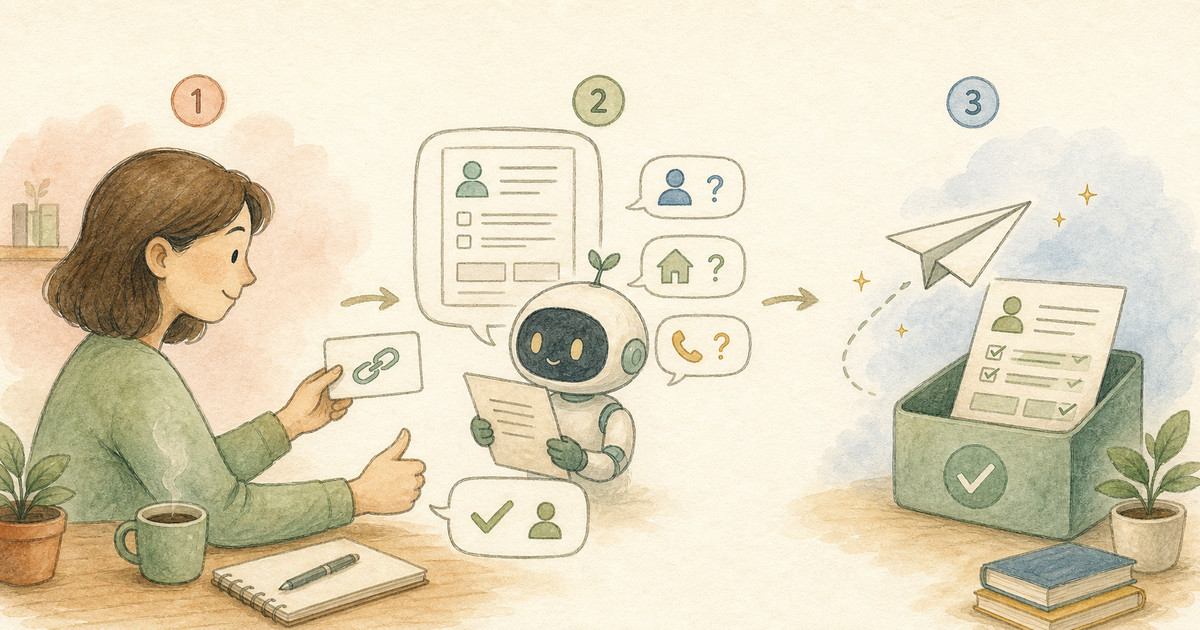
Sometimes the user is not the form owner. Someone sends them a form and says, “Can you fill this out?” The useful agent behavior is not to generate a new form. It is to understand the existing form, ask the user for anything missing, and submit the response accurately.
That requires the agent to behave carefully.
It should read the structure first. It should distinguish facts from opinions. It should not invent personal details. It should ask for confirmation when a response is subjective or sensitive. Then it should submit the form using the correct field values.
This is what makes “submit entries” a meaningful agent capability. The agent is not only a builder. It can also be a respondent on the user’s behalf, with the user’s direction.
We tested this with a published FormHug feedback form. The agent read the fields, drafted a response, asked the user to confirm the name and email, fixed the ranking field into the required submission shape, and submitted the entry. That felt different from “make me a survey.” It felt like the agent was participating in the form workflow with the user still in charge.
The Form Becomes a Workflow Object.
This is the real shift.
An AI-generated form is usually treated as an output. You ask for it, the agent creates it, and the story ends with a link.
An agent-ready form is treated as a living workflow object. It can be created, inspected, changed, answered, submitted, analyzed, and connected to the next step.
For form owners, that means an agent can create a quiz, add answer explanations, set score-based feedback, change the header image, update the theme, inspect submissions, or configure follow-up behavior.
For respondents, it means an agent can read someone else’s published FormHug form, understand what is being asked, ask the user for missing information, and submit a response through the same public form system.
For downstream workflows, it means the form is no longer trapped as a web page. It becomes structured input that agents can use for summaries, routing, reminders, research, scoring, reporting, and follow-up.
That is why the phrase “AI form builder” is starting to feel too small to me. Generation is useful, but it does not describe the whole category anymore.
The more useful standard is agent-ready forms: forms that are beautiful for humans, readable by agents, manageable by agents, and safe for agents to submit when the user asks them to.
Where FormHug Fits.
This is the direction we are building FormHug toward.
For humans, FormHug still cares about the public form experience: design, clarity, mobile completion, quizzes, surveys, registrations, payments, and result pages people can actually use.
For agents, FormHug exposes forms as structured objects. Agents can create and manage forms through MCP for agents, read published form structure through markdown-friendly form links, and submit entries to published FormHug forms when the user wants help responding.
That combination changes the role of the form. It is no longer only a destination someone visits. It becomes an interface between people and agents.
The agent-ready form is not a form with AI sprinkled on top. It is a form system built for two kinds of participants: humans who need trust and clarity, and agents that need structure and permissioned action.
That is the difference between AI-generated and agent-ready. One creates the page. The other supports the workflow.

Written by
FormHug TeamProduct, research, and form automation team
The FormHug Team brings together product builders, workflow researchers, and form automation practitioners who study how people collect, route, and act on information online. Our guides are based on hands-on product testing, template analysis, customer workflow patterns, and deep experience with forms, surveys, quizzes, AI-assisted creation, integrations, and results sharing.