How to Build a Product Recommendation Quiz with AI
Make it interactive
Turn these questions into a scored quiz
Build a quiz with answer keys, result pages, explanations, and a shareable link.
A product page asks people to compare options. A product recommendation quiz asks them a few questions and narrows the choice for them.
That difference is useful when the catalog is broad, the buyer is unsure, or the best option depends on context. A recommendation quiz should not simply collect an email and reveal a random product. It should explain why the recommendation fits the person’s needs.
The Makeup Style Quiz is a clear example of recommendation logic. It asks about face shape, undertone, features, vibe, and available time, then returns a style direction with practical tips.
TL;DR — A product recommendation quiz asks about needs, constraints, and preferences, then maps the answer pattern to a useful recommendation with reasons.
- Ask what changes the choice — avoid collecting details that never affect the result.
- Use constraints as signals — budget, time, experience, and context often matter more than taste alone.
- Explain the recommendation — show which answers led to the result.
- Works for: beauty, courses, software plans, travel, services, and product discovery.
- A recommendation quiz should guide a decision, not disguise a generic sales pitch.
What is a product recommendation quiz?
A product recommendation quiz is an interactive question flow that matches a person’s answers to one or more products, plans, services, or next actions.
It is different from a personality quiz because the outcome is intended to support a choice. It is different from a knowledge quiz because there is usually no correct answer. The result is judged by fit.
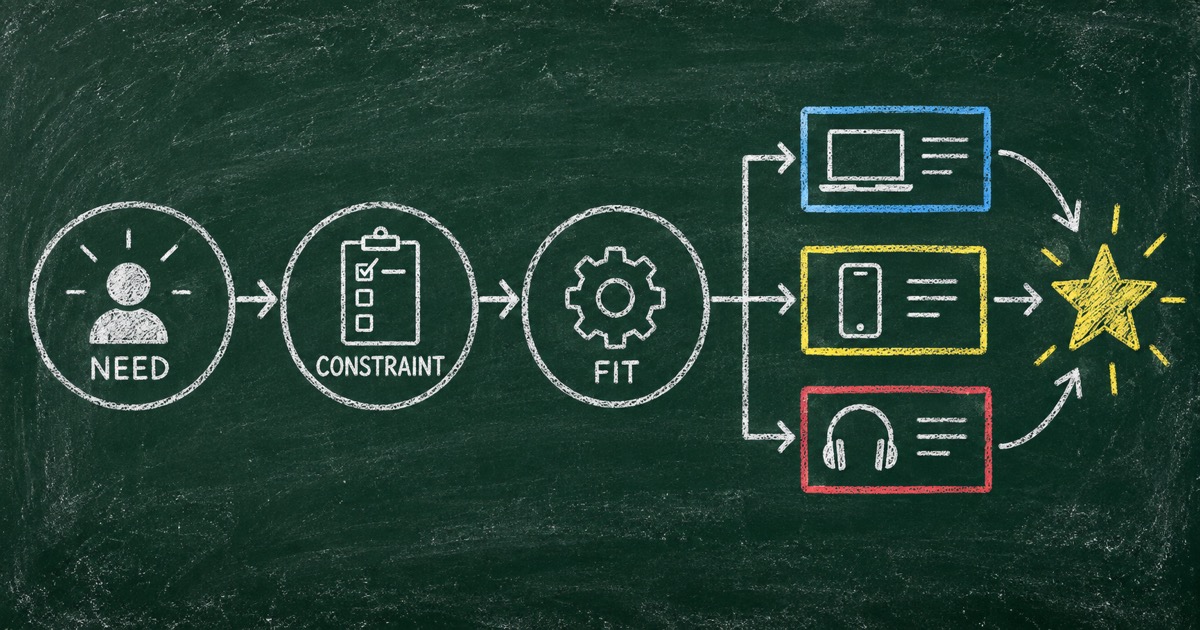
The Need → Constraint → Fit framework
Use three layers to design the questions:
- Need — what is the person trying to accomplish?
- Constraint — what limits the options? Time, budget, experience, location, or comfort.
- Fit — which result best matches the combined pattern?
For a makeup quiz, the need might be a look that feels right. Constraints include time and comfort with bold colors. Fit becomes Natural Beauty, Soft Glam, Classic Glam, or Bold / Statement.
For a software recommendation quiz, the need might be collecting registrations, analyzing feedback, or running a scored assessment. The constraint could be a need for a hosted link or a ChatGPT-based workflow.
Ask questions that change the recommendation
Needs
Start with the job to be done:
- What are you trying to create?
- What problem are you solving?
- What would make the result successful?
Constraints
Constraints often provide stronger signals than vague preference questions:
- How much time do you have?
- How much experience do you have?
- Do you need a simple link, an embed, or a team workflow?
- Is the recommendation for everyday use or a special occasion?
Fit signals
Ask about preferences only after the practical context is clear. A person may like a bold option but need something quick for daily use. The recommendation should account for both.
Design the result page like advice
Each result should include:
- recommended option;
- why it fits the answers;
- what it is best for;
- one limitation or trade-off;
- the next step to try it.
The result should make the recommendation feel explainable. If someone shares it with a colleague, the explanation should travel with the result.
Prompt for a recommendation quiz
Create a 9-question product recommendation quiz for a beauty audience.

Goal: recommend one of four makeup styles based on fit, not correctness.
Ask about face shape, skin undertone, eye and lip features, available time,
occasion, everyday style, and comfort with bold colors.

Outcomes:
- Natural Beauty Look
- Soft Glam Look
- Classic Glam Look
- Bold / Statement Look

For each outcome, explain which answer patterns lead there, describe who it is
best for, list three practical tips, and name one trade-off. Use warm language.
Do not make medical or permanent claims about the participant.
Build the quiz in FormHug
Step 1: Define the options
List the products or outcomes before writing questions. If two options are not meaningfully different, combine them.
Step 2: Generate the questions and mapping
Use FormHug’s AI quiz maker, or begin with the Makeup Style Quiz template. Ask the AI to explain how each question changes the recommendation.
Step 3: Add the decision context
Review whether the quiz asks about budget, timing, experience, or use case where those factors matter. A recommendation that ignores constraints will feel like generic content.
Step 4: Test competing paths
Take the quiz with two similar profiles and check whether the recommendations are explainably different. Test an edge case too: a person who wants a bold style but has little time, for example.
Recommendation quizzes and lead generation
A recommendation quiz can be a useful lead-generation asset when the result genuinely helps before asking for contact information. Keep the value exchange clear. Explain what the respondent will receive and do not hide a generic result behind unnecessary friction.
If the quiz is primarily about learning or reflection, do not add an email gate simply because it is available. The lead generation quiz guide covers that trade-off in more detail.
Frequently Asked Questions
How do you create a product recommendation quiz?
List the available options, define the needs and constraints that distinguish them, ask focused questions, and map answer patterns to a result with an explanation and next step.
What questions should a product recommendation quiz ask?
Ask about the person’s goal, experience, budget, time, context, and preferences—but keep only questions that change the recommendation.
How many results should a recommendation quiz have?
Four to six results is a useful range for a short quiz. The right number depends on how distinct the products or recommendations are.
Can AI recommend products from quiz answers?
AI can generate the question structure and draft outcome mapping. Review the recommendations, product facts, and any claims before using the quiz commercially.
Can I build a recommendation quiz with FormHug?
Yes. FormHug can create questions, outcome profiles, explanations, and a shareable result page from a plain-language prompt.
Related
- How to Create a Personality Quiz with AI — build outcome profiles from preferences
- How to Build a Product Recommendation Quiz — explore the broader recommendation workflow
- The Result Page Is Where a Quiz Becomes Useful — write explanations that make recommendations credible
Help people choose with more confidence. Build a recommendation flow with FormHug’s AI quiz maker →

Written by
FormHug TeamProduct, research, and form automation team
The FormHug Team brings together product builders, workflow researchers, and form automation practitioners who study how people collect, route, and act on information online. Our guides are based on hands-on product testing, template analysis, customer workflow patterns, and deep experience with forms, surveys, quizzes, AI-assisted creation, integrations, and results sharing.