18 Best Creator & Solopreneur Survey Templates for 2026
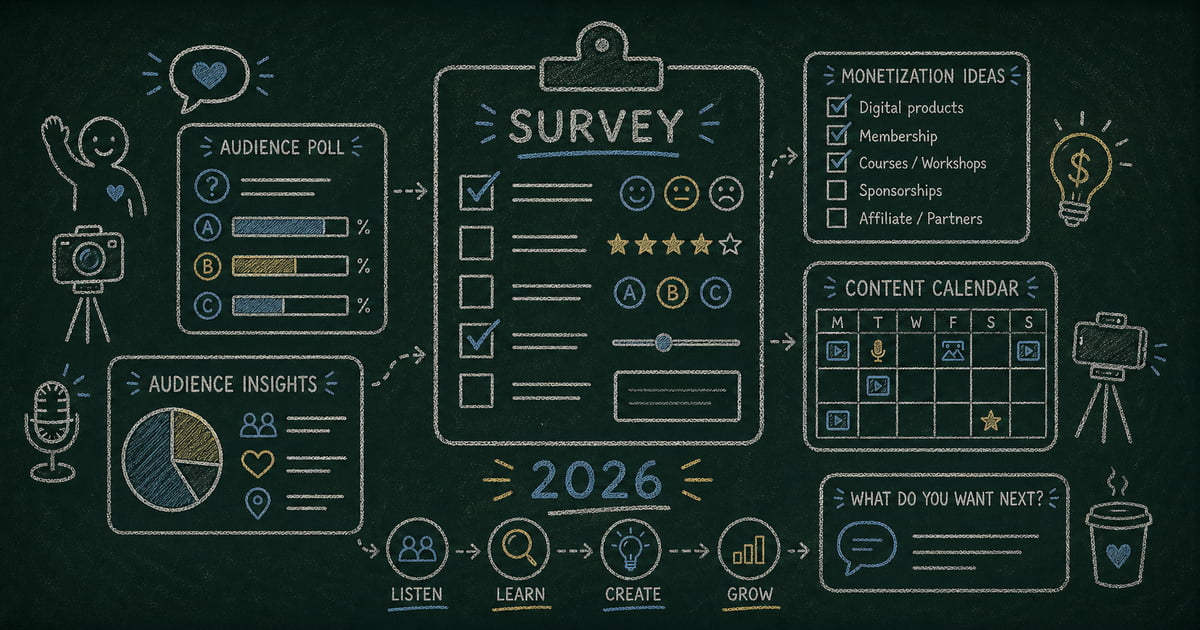
Start collecting responses
Turn this into a shareable survey
Draft the questions, publish a clean link, and keep every response organized in FormHug.
91.9% of professional creators now use AI in some part of their work — writing, editing, ideation, research, or publishing. But far fewer have ever used a structured survey to understand what their audience actually wants from them, how much they’d pay for a product, or whether their content direction is landing. Creators invest heavily in AI-assisted output. Most invest almost nothing in audience-driven input.
The gap matters because first-party audience data is the only data a creator fully owns. Platform analytics tell you what got clicked. Surveys tell you why, what’s missing, and what someone would actually pay for. For independent creators, that difference is the difference between guessing and knowing — and between launching products that sell and launching products that don’t.
These 18 templates cover the full range of creator and solopreneur research: audience content preferences, product validation, monetization acceptance, brand perception, AI tool usage, income benchmarking, and creator wellbeing. Each template links directly to a ready-made FormHug form you can embed in a newsletter, share as a bio link, or distribute through any channel your audience already uses.
TL;DR — These 18 survey templates give creators and solopreneurs structured research tools to collect the first-party audience data that informs better content, product, and business decisions.
- Audience research & validation — content preferences, newsletter engagement, product idea validation, willingness to pay, demographics
- Monetization & brand — collaboration feedback, monetization acceptance, brand perception, influencer intake
- AI tools & business stack — creator AI usage, solopreneur tool stack, freelancer income, course validation
- Creator wellbeing & community — burnout check-in, community membership value
- Works for: YouTubers, Substack writers, podcasters, course creators, Notion template makers, and freelancers
- All templates are free and shareable via link — no code required
Quick Comparison: 18 Creator & Solopreneur Survey Templates
| Template | Best for | Primary data captured |
|---|---|---|
| Audience Content Preference Survey | Content strategy input | Preferred formats, topics, frequency |
| Newsletter & Community Engagement Survey | Newsletter optimization | Open rate drivers, content satisfaction |
| Product Idea Validation Survey | Pre-launch research | Problem fit, feature priority, price sensitivity |
| Audience Willingness to Pay Survey | Pricing research | Price points, paid product acceptance |
| Content Format Preference Poll | Content calendar input | Short vs long, video vs text vs audio |
| Fan / Follower Demographics Survey | Audience profiling | Age, location, occupation, income range |
| Brand Collaboration Feedback Survey | Brand partnership intake | Creator-brand fit, content direction preferences |
| Creator Monetization Preference Survey | Monetization strategy research | Sponsorship vs paywall vs affiliate acceptance |
| Personal Brand Perception Survey | Brand positioning clarity | How audience perceives niche and expertise |
| Digital Product / Template Feedback Survey | Post-purchase UX | Product satisfaction, improvement suggestions |
| Influencer Brand Collaboration Survey | Brand intake form | Portfolio, rates, audience demographics |
| Solopreneur Tool Stack Survey | Industry benchmarking | Tools used, spend, workflow structure |
| Creator AI Tools Usage Survey | AI adoption benchmarking | AI tools adopted, use cases, trust level |
| Freelancer Rate & Income Survey | Income benchmarking | Rates by specialty, income range, client mix |
| Course Topic Validation Survey | Pre-launch course validation | Topic interest, format preference, price point |
| Creator Burnout & Wellbeing Survey | Community wellbeing signal | Publishing frequency pressure, rest behavior |
| Solopreneur Burnout Check-in | Solopreneur burnout research | Time management stress, capacity limits |
| Community Membership Value Survey | Paid community retention | Value perception, churn risk signal |
Audience Research & Product Validation
The most valuable research a creator can run is the simplest: ask the audience what they want, whether they’d pay for it, and what they already know about you. The answers to those three questions are the foundation of every content and product decision that works.
We built these six templates specifically for distribution through the channels creators already use — newsletter CTA, bio link, community post, post-video prompt. Short enough to complete in under three minutes, structured enough to produce segmentable data.
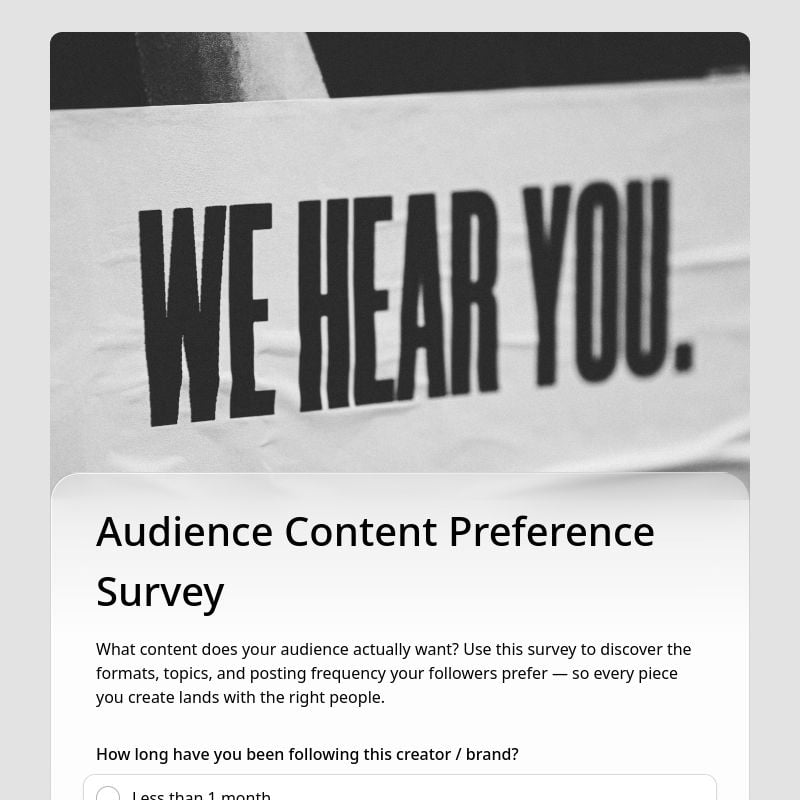
Audience Content Preference Survey
The most-searched creator survey template — and for good reason. It answers the question every creator asks informally but rarely measures systematically: what does the audience actually want more of? The template captures preferred topics, preferred formats (long-form vs short, video vs written vs audio), preferred publishing frequency, and what’s currently missing from the creator’s output. Add it to your newsletter footer or bio link and let it run continuously — the data compounds over time.
Newsletter & Community Engagement Survey
Designed specifically for Substack, Beehiiv, and email newsletter creators. It goes beyond open rate and click data to capture what subscribers actually find valuable, what they skim or skip, and what they’d want more of. For paid newsletter operators, it also surfaces the features and content types that most drive subscription renewals versus those that are included out of habit. The segmentation between free and paid subscribers produces particularly useful data.
Product Idea Validation Survey
The most important survey a creator can run before launching any product — a course, template pack, ebook, or community. It validates problem fit (do people actually experience the problem this product solves?), feature priority (which components matter most?), and price sensitivity (at what point does the price become a barrier?). Running this before launch, not after, is the difference between building what sells and building what you hope will sell.
Audience Willingness to Pay Survey
A more targeted version of product validation, focused specifically on the pricing question. It uses a structure inspired by Van Westendorp price sensitivity research — what price seems too cheap (signals low quality), what seems expensive but acceptable, what seems too expensive — to triangulate the price range an audience will actually convert at. For creators launching paid products for the first time, this data replaces the guesswork that most people default to.
Content Format Preference Poll
Short-form vs long-form, video vs text vs audio vs carousel: format preference varies significantly by audience demographic and how they discovered a creator. This template captures those preferences alongside the contexts in which people consume content — commute, lunch break, focused reading time — to help creators optimize format for when and how their audience actually engages. It pairs naturally with the Content Preference Survey but focuses narrowly on format rather than topic.
Fan / Follower Demographics Survey
First-party demographic data — age, location, occupation, income range, how they found you — is the asset that platforms don’t give you. This template collects it directly. The data is valuable for brand sponsorship negotiations (most brands want to see audience demographics before committing to a collaboration), for content strategy (understanding that 60% of your audience is outside your home country changes what references land), and for product pricing (income range data directly informs what price points are realistic).
Creator Monetization, Brand & Collaboration
Audience research tells you what people want. Monetization research tells you how they’re willing to pay for it. Brand perception research tells you whether your positioning is landing the way you intend. These five templates cover all three dimensions.
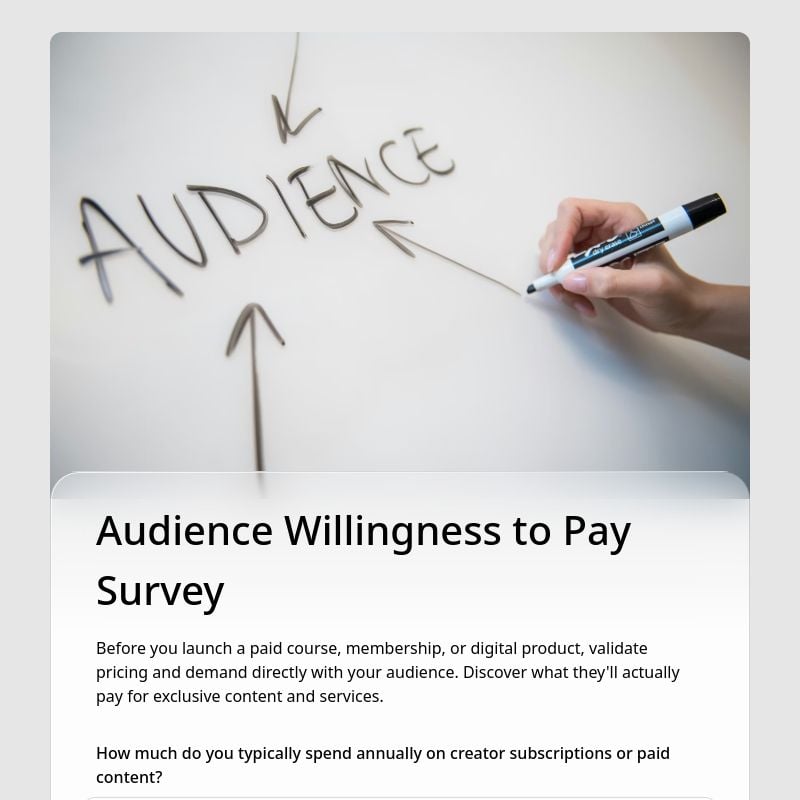
Creator Monetization Preference Survey
Different audiences tolerate different monetization models differently. An audience that assembled around educational content often has high acceptance for paid courses but low tolerance for sponsor integrations. An entertainment audience may be the reverse. This template measures your audience’s specific preferences: sponsorship style, paywall tolerance, affiliate link acceptance, and which monetization formats feel extractive versus value-aligned. Running it before adding a new revenue stream avoids the audience backlash that follows monetization experiments done without data.
Personal Brand Perception Survey
How do you know if your audience perceives your niche and expertise the way you intend? Most creators don’t — they operate on the assumption that their positioning is clear when their audience often experiences something different. This template asks respondents to describe what they think the creator is known for, what they’d recommend the creator to a friend for, and where they feel the expertise is strongest. The gap between your intended positioning and their actual perception is the most actionable brand data you can collect.
Brand Collaboration Feedback Survey
For creators who work with brand partners, this template captures audience feedback on recent collaborations: whether the brand fit felt natural, how the integration affected content quality perception, and what the audience’s threshold is for sponsored content frequency. Run it 2–4 weeks after a collaboration to get post-exposure data, not reactive first impressions. For creators negotiating long-term partnerships, the data demonstrates audience receptiveness to brand work — a compelling asset in partnership conversations.
Digital Product / Template Feedback Survey
Post-purchase feedback from buyers of Notion templates, Figma systems, digital planners, or course modules. This template captures satisfaction, friction points in the product experience, what was most valuable, and what was missing. For product creators running multiple SKUs, the segmented data across products reveals which are underperforming and why — without relying solely on review scores that rarely explain the underlying experience.
Influencer Brand Collaboration Survey
Structured as a brand intake form — for creators who receive inbound partnership inquiries and want to gather portfolio context, rate card expectations, audience demographic data, and content direction preferences before a first call. Replaces the back-and-forth email exchange that wastes time for both parties. For agencies and brands managing creator rosters, it produces standardized data that’s easy to compare across creator candidates.
AI Tools, Business Stack & Income Research
Creators and solopreneurs are among the fastest AI adopters in any segment — 91.9% report using AI in their work — but adoption patterns vary enormously by tool, use case, and creator type. These four templates help you understand and benchmark those patterns, whether you’re researching your own behavior, polling your audience, or building publishable industry data.
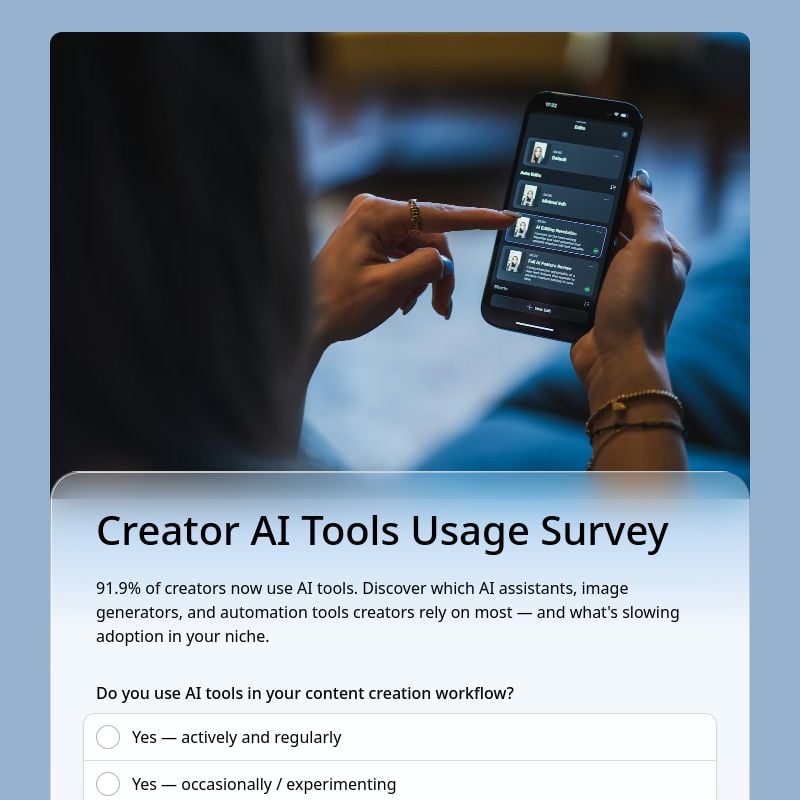
The most specific AI research template for the creator segment. It maps adoption across the tools most relevant to creative work — writing (Claude, ChatGPT, Jasper), image generation (Midjourney, DALL-E), video (Runway, Sora), research, SEO, and audio. The questions distinguish between tools tried once and tools in active regular use — a distinction that matters enormously for understanding real adoption versus experimentation. Useful for content calendars about AI trends, for audience-facing research reports, and as an ongoing benchmark.
Published as an industry benchmark, this template produces the kind of data that performs well as original research content: “best tools used by solopreneurs in 2026.” It covers the full stack — project management, writing, communication, finance, design, AI — alongside monthly spend and time investment in tool switching. The “best tools 2026” angle makes results highly shareable on Product Hunt, X, and LinkedIn communities where this audience is most active.
Freelancer Rate & Income Survey
Income transparency is one of the most powerful hooks for the freelancer and solopreneur audience. This template collects hourly and project rates by specialty, annual income ranges, client type mix, and revenue diversification strategies. The data is valuable for both individual benchmarking and for publishing as a freelancer income report — the kind of “what freelancers in [category] actually earn” content that spreads organically through professional communities.
Course Topic Validation Survey
Pre-launch validation specifically for online courses and cohort programs. It goes beyond “would you take a course on X” to capture: which specific problem the course should solve, what format the respondent prefers (live cohort vs self-paced vs hybrid), what they’ve already tried that didn’t work, and what price point they’d consider. For Kajabi and Teachable creators, this template replaces the “launch and hope” approach with data that makes course design decisions defensible.
Creator Wellbeing & Community Retention
Burnout is under-reported in the creator economy because reducing output is often framed as a “strategic pivot” — rebrands, hiatus announcements, format changes that are actually rest in disguise. These three templates help creators and researchers name the underlying dynamic and measure it more honestly. For HR teams studying the same dynamics in employee contexts, the employee wellbeing survey templates use the Maslach Burnout Inventory framework for workplace settings.
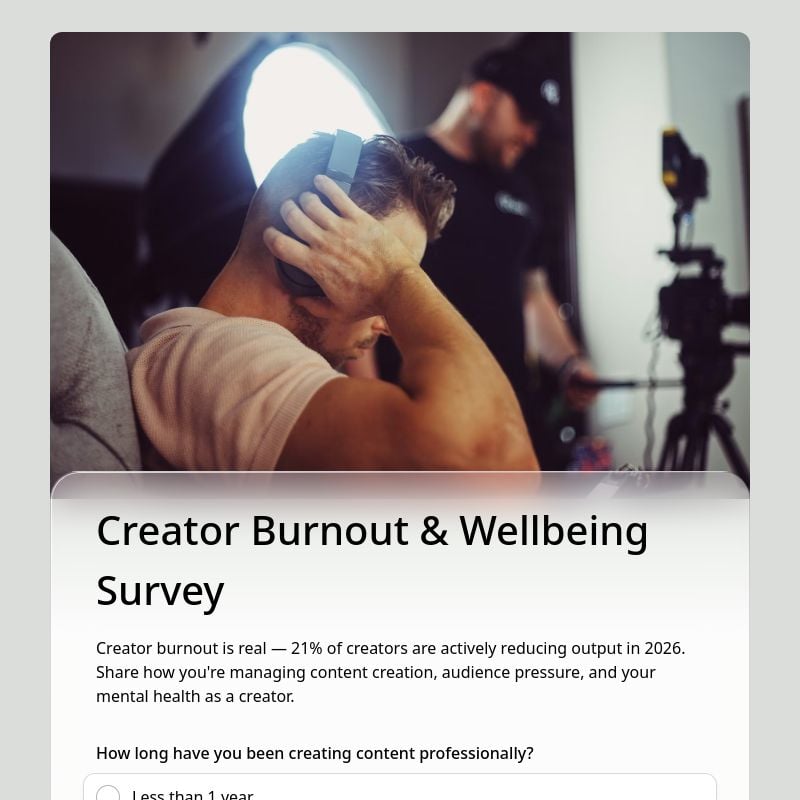
Creator Burnout & Wellbeing Survey
This template is designed for two use cases: running it on yourself as a periodic self-assessment, or distributing it to your creator community as research. It measures publishing pressure (internal and external), rest and recovery behavior, the sustainability of the current output pace, and what changes would most reduce burnout risk. The data from distributing it to your audience builds trust and community — people appreciate being asked how they’re doing rather than just what they want to consume.
For solo business operators, the operational causes of burnout are distinct from general creator burnout: client boundary erosion, scope creep, admin load, difficulty delegating, and the absence of colleagues to absorb emotional labor. It’s more operationally specific than the creator burnout template — less about publishing schedule pressure, more about business structure sustainability.
Community Membership Value Survey
For creators running paid communities on Circle, Discord, or Slack, this template captures the signals that precede churn: declining perceived value, underused features, unmet expectations from the sales page, and weak social connection within the community. Run it 60–90 days after a cohort joins — after the initial enthusiasm has faded and the real experience of the community has settled — to catch at-risk members before they silently cancel.
How to Choose the Right Creator Survey Template
Are you doing audience research or product research?
Audience research (Content Preference, Demographics, Format Preference) tells you about the people you already have. Product research (Product Idea Validation, Willingness to Pay, Course Topic Validation) tells you about what they’d buy. Both matter, but they serve different decisions. Run audience research when you’re recalibrating your content direction; run product research when you’re 60–90 days from launching something.
Is this survey for your existing audience or for market-level data?
Templates like Creator AI Tools Usage and Solopreneur Tool Stack can be distributed beyond your own audience — you can partner with other creators, post in community forums, or run paid distribution to collect broader data for publishing as industry research. Templates like Audience Willingness to Pay and Content Format Preference should only go to people who already know your work — the answers from strangers won’t reflect what your actual audience will pay.
Do you want to publish the results?
Publishable research needs demographic framing: niche, platform, follower count range, years of experience. If your goal is an “AI Tools Used by Creators in 2026” report that other creators will share, add those segmentation fields before distribution. If the goal is internal content strategy input, you can skip them — but you’ll lose the ability to filter data by relevant audience subgroups.
How will you distribute this survey?
Newsletter CTA (for engaged subscribers), bio link (for passive discovery), community post (for active members), and post-content prompt (“here’s what I’m researching next”) all produce different respondent populations. Newsletter respondents skew toward your most engaged audience; bio link respondents skew toward new arrivals. Knowing which population answered your survey changes how you interpret the results.
Final Recommendation
For creators launching anything in 2026 — a course, a community, a paid newsletter, a template pack — the Product Idea Validation Survey and Audience Willingness to Pay Survey together replace the most expensive mistake in creator businesses: building something no one will pay for at the price you need to make it viable.
For creators who feel like their content is performing but not connecting, the Personal Brand Perception Survey and Content Format Preference Poll are the diagnostic pair: one tells you whether your positioning is landing, the other tells you whether the format is getting in the way of the message.
For solopreneurs and freelancers who are starting to feel the weight of running everything alone, the Solopreneur Burnout Check-in is worth running quarterly — not because the data will solve the problem, but because naming it in a structured way is the first step toward doing something about it.
All 18 templates are free to use and shareable via link. For a full overview of FormHug’s survey builder — question types, logic branching, and real-time analytics — see the survey maker feature page. Start collecting first-party audience data →
Frequently Asked Questions
What is a creator survey template?
A creator survey template is a pre-built set of questions designed to help content creators, solopreneurs, and independent business owners collect structured data from their audience, community members, or peers. Rather than designing surveys from scratch, a template gives you a validated question set that captures the data most relevant to a specific creator research goal — audience preferences, product validation, monetization testing, or wellbeing tracking.
How do I distribute a survey to my audience as a creator?
The most effective distribution channels for creator surveys are: (1) newsletter CTA — include a single-question hook with a link to the full survey; (2) bio link on Instagram, TikTok, or YouTube — add a survey link that runs continuously; (3) community post in Discord, Circle, or Slack — frame it as research you’re doing for your audience; (4) end-of-content prompt — “I’m researching X, would you take 2 minutes to share your thoughts?” Each channel produces a different respondent mix, so note where respondents came from if segmentation matters.
How many responses do I need for creator survey data to be useful?
For internal content and product decisions, 50–100 responses are typically sufficient to see patterns. For audience research you intend to publish (income benchmarks, tool stack reports), 200+ responses with demographic segmentation produce data credible enough to cite. For pricing research specifically, the Van Westendorp method used in the Willingness to Pay template needs at least 100 responses to produce stable price sensitivity curves.
Can I use these survey templates to validate a course before launch?
Yes. The Course Topic Validation Survey and Product Idea Validation Survey are both designed specifically for pre-launch validation. The key is to run them 60–90 days before your intended launch date — early enough that the results can genuinely change your approach. Running validation 2 weeks before launch almost always produces confirmation bias, because by that point the sunk cost of preparation makes it psychologically difficult to pivot based on what you find.
Are these creator survey templates free to use?
All 18 templates are free to access and customize in FormHug. You can edit questions, add your branding, embed a survey in a newsletter or website, and collect responses without a paid subscription. Response data is stored in your FormHug dashboard and exportable at any time.
How is a content preference survey different from a demographic survey?
A content preference survey asks what your audience wants to see more of — topics, formats, frequency, depth. A demographic survey asks who your audience is — age, location, occupation, income, how they found you. Both are valuable but serve different decisions. Content preference data drives your editorial calendar. Demographic data drives your positioning, pricing, and brand partnership conversations. For most creators, running the demographic survey once per year and the content preference survey twice per year is the right cadence.

Written by
FormHug TeamProduct, research, and form automation team
The FormHug Team brings together product builders, workflow researchers, and form automation practitioners who study how people collect, route, and act on information online. Our guides are based on hands-on product testing, template analysis, customer workflow patterns, and deep experience with forms, surveys, quizzes, AI-assisted creation, integrations, and results sharing.