Mini Exam Questions: Examples for Training, Hiring, and Classrooms

Create the assessment
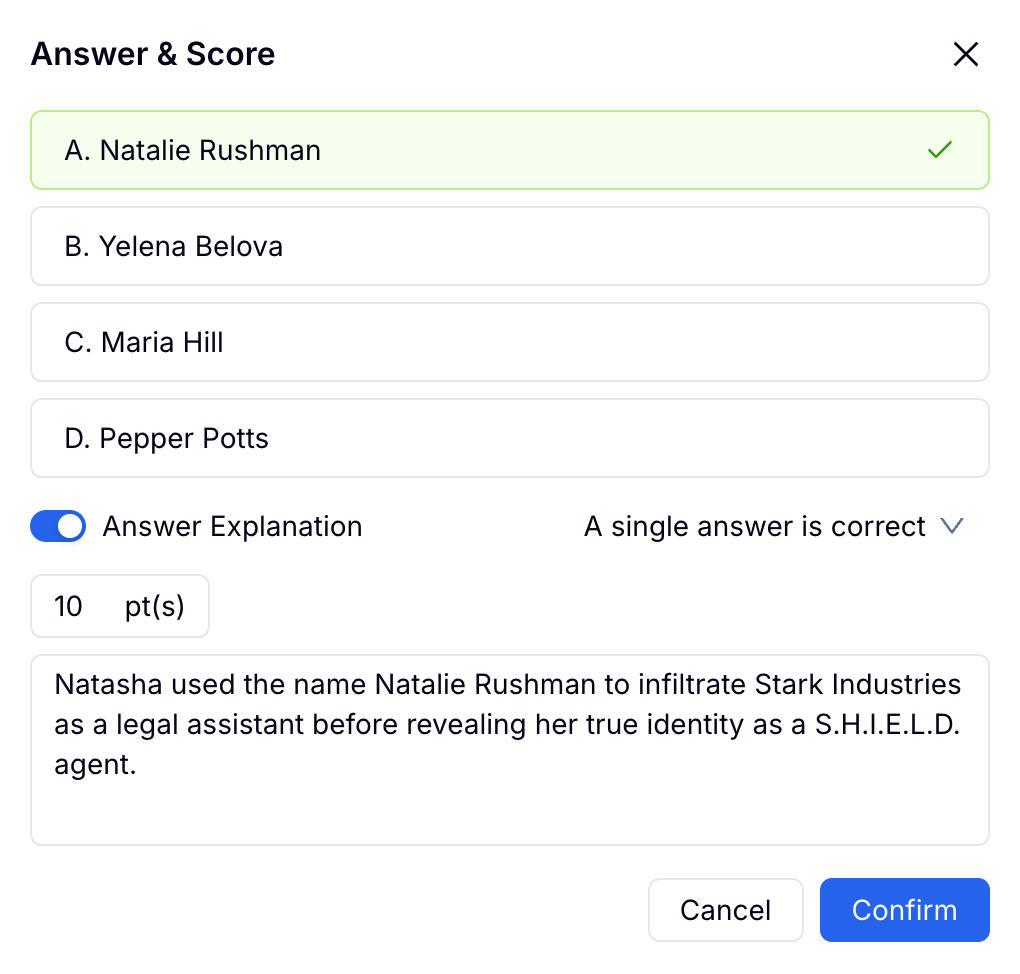
Turn this into a scored assessment
Build an assessment with scoring, result pages, feedback, and records you can review later.
A mini exam is only as useful as its questions. Five well-written questions can reveal whether someone understood the lesson. Fifteen vague questions can create a score that looks official but says almost nothing.
The strongest mini exam questions test one learning objective, use plausible wrong answers, and give feedback that corrects the most likely misunderstanding. They do not try to cover an entire course. They check whether one fresh concept has actually landed.
This guide gives you mini exam question examples for training, hiring, compliance, and classrooms, plus a simple way to turn them into an automatically scored FormHug quiz.
TL;DR - Mini exam questions are short scored questions designed to check one topic immediately after learning or training.
- Test one learning objective - every question should point back to the same lesson, skill, or policy.
- Use plausible distractors - wrong answers should reveal real misconceptions, not obvious throwaways.
- Explain the answer - feedback is what turns a mini exam into a learning loop.
- Works for: employee training, compliance checks, classroom reviews, hiring screens, onboarding, and course modules.
- FormHug can generate mini exam questions with AI, assign scores, show answer explanations, and publish instant results.
What Makes a Good Mini Exam Question?
A good mini exam question checks whether the learner can remember, recognize, apply, or explain one specific idea. It should be easy to grade and useful to review.
Strong mini exam questions usually have four parts:
| Part | Purpose |
|---|---|
| Clear prompt | Tells the learner exactly what to answer |
| Focused answer options | Avoids overlap or ambiguity |
| Correct answer | Supports automatic scoring |
| Explanation | Teaches the concept after submission |
The explanation is not decoration. It is the learning moment. If someone gets the answer wrong, the explanation should correct the reason they were likely wrong.
Mini Exam Question Types
Multiple choice
Best for concepts with one correct answer.
Example:
Which action best protects customer data when sharing a spreadsheet externally?
- Remove unnecessary personal data before sharing
- Send the file only during business hours
- Use a shorter file name
- Add the spreadsheet to a team chat
Explanation: Removing unnecessary personal data reduces exposure and is a basic data minimization practice.
True or false
Best for quick knowledge checks. Use sparingly because true/false questions are easier to guess.
Example:
True or false: A customer can request deletion of personal data even if they are no longer an active user.
Correct answer: True
Explanation: Privacy rights usually do not depend on whether the customer is still active.
Scenario questions
Best for testing application, not memorization.
Example:
A teammate receives an invoice from a familiar vendor, but the sender email domain is slightly misspelled. What should they do first?
- Open the attachment to check the invoice
- Forward it to the whole team
- Verify the sender through a trusted channel
- Pay it quickly because the vendor is familiar
Explanation: The misspelled domain is a phishing signal. Verification should happen before opening attachments or taking action.
Multiple-answer questions
Best when several answers are correct. Make it clear that more than one answer may be selected.
Example:
Which signs can indicate a phishing email? Select all that apply.
- Urgent request for payment
- Slightly misspelled sender domain
- Unexpected attachment
- Message sent on a weekday
Correct answers: urgent request, misspelled domain, unexpected attachment.
Fill-in-the-blank
Best for exact terms, formulas, vocabulary, or short answers.
Example:
The process of removing unnecessary personal data before sharing a file is called data _____.
Correct answer: minimization
Mini Exam Questions for Employee Training
Use these after onboarding, internal workshops, product training, or role-specific enablement.
- Which step should happen before sharing a customer file externally?
- What is the correct first action when you cannot access a required system?
- Which statement best describes our escalation process?
- What information should be included in a handoff note?
- Which customer issue should be escalated immediately?
- What is the safest way to confirm a sensitive request?
- Which action violates the documented workflow?
- What should you do if a required field is missing from a customer record?
- Which example shows correct use of the internal knowledge base?
- What is the next step after completing the onboarding checklist?
Mini Exam Questions for Compliance
Compliance mini exams should use scenario questions whenever possible. Policies become clearer when people apply them to realistic situations.
- A customer asks for a copy of their data. What should you do first?
- Which type of information should never be pasted into a public AI tool?
- What is the correct response to a suspected phishing message?
- When should a security incident be reported?
- Which example is an acceptable use of customer data?
- What should you do before sending personal data to a vendor?
- Which password practice is least secure?
- What information is required in an incident report?
- Which file-sharing method follows company policy?
- What should happen when access is no longer needed?
For formal compliance workflows, use pass/fail thresholds and certificates. See how to create an online quiz for result page and certificate setup.
Mini Exam Questions for Classrooms
Classroom mini exams should test the lesson objective, not every detail from the unit.
- Which example best shows the concept from today’s lesson?
- What is the first step in solving this type of problem?
- Which answer explains why the example is incorrect?
- What term matches this definition?
- Which sentence uses the concept correctly?
- What would happen if one condition changed?
- Which source would be most reliable for this question?
- What is the strongest evidence for the claim?
- Which mistake appears in this solution?
- What should you review before the next lesson?
Pair classroom mini exams with student perception surveys when you want to understand both learning outcomes and learning conditions.
Mini Exam Questions for Hiring
Hiring mini exams should be short, job-relevant, and focused on realistic work. Avoid trivia-style questions that reward memorization but do not predict performance.
- Which message would you send to clarify an ambiguous client request?
- Which spreadsheet formula would solve this reporting problem?
- What is the first issue you notice in this support response?
- Which prioritization choice makes the most sense and why?
- Which code review comment is most useful?
- Which sales follow-up is most appropriate after this call summary?
- What risk should be flagged before launching this campaign?
- Which design option best matches the stated user need?
- What information is missing from this project brief?
- Which next step would you take first?
For hiring, use mini exams as one input, not the whole decision. Keep them job-related and explain how results will be used.
How to Build Mini Exam Questions in FormHug
Step 1: Start with one learning objective
Write the objective before writing questions: “Learners should be able to identify phishing emails” or “New hires should know how to escalate urgent customer issues.” Then keep every question tied to that objective.
Step 2: Generate a draft with AI
Open FormHug and prompt: “Create a 10-question mini exam for new employee data privacy training with multiple choice, true/false, scenario questions, correct answers, and explanations.”
Step 3: Review distractors and explanations
Replace obvious wrong answers with plausible misconceptions. Then write explanations that teach the rule, not just reveal the answer.
Step 4: Configure results and publish
Use automatic scoring, show answer explanations, and add score-based feedback. For higher-stakes exams, add a passing threshold, time limit, randomization, and certificate.
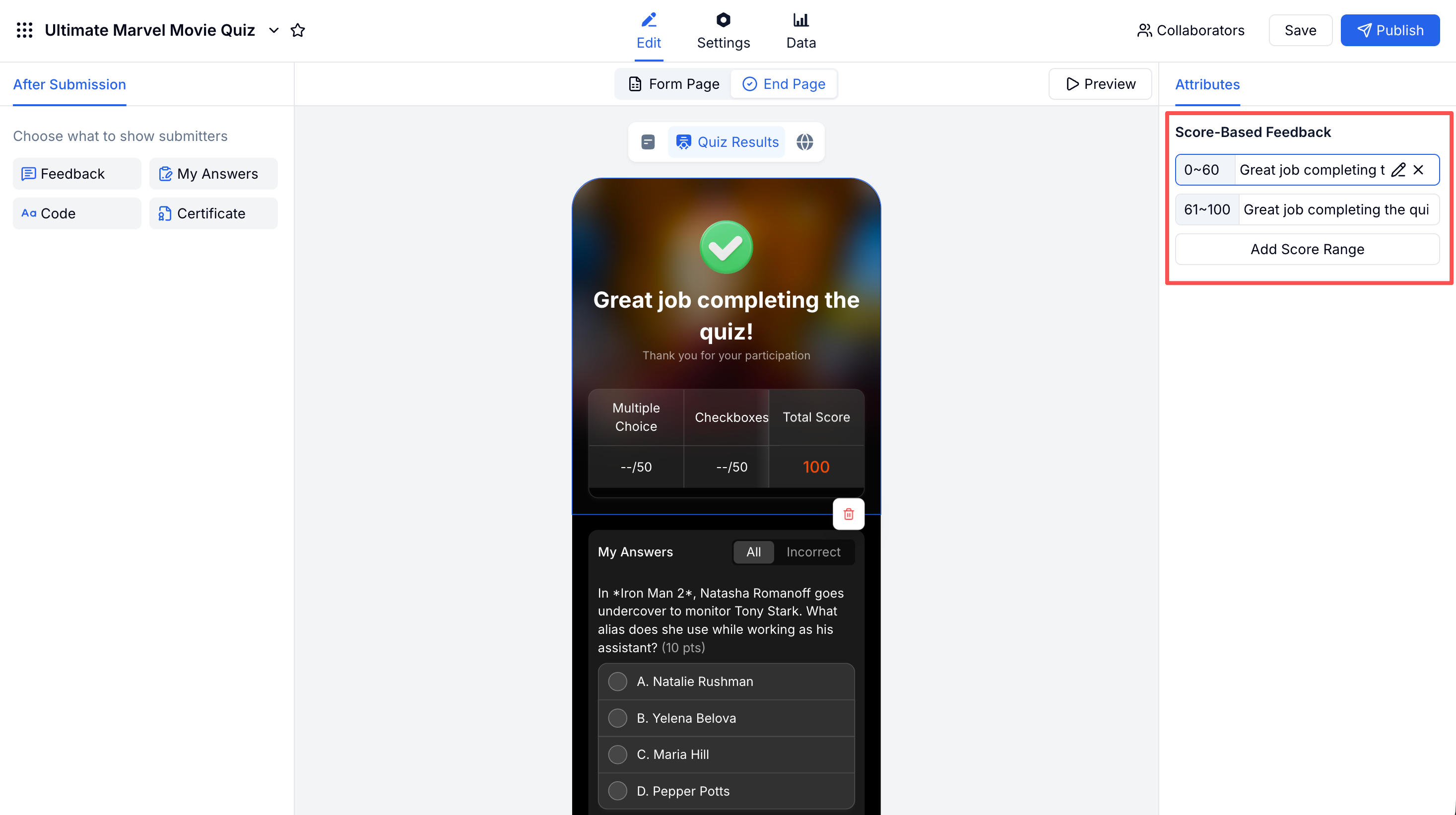
For the full build workflow, see how to create a mini exam online and the FormHug quiz maker.
Frequently Asked Questions
What are mini exam questions?
Mini exam questions are short scored questions used to check understanding of one focused topic. They are usually part of a 5-15 question exam after a lesson, training, or module.
How many questions should a mini exam have?
Most mini exams should have 5 to 15 questions. Use fewer for quick classroom checks and more for onboarding, compliance, or training verification.
What question type works best for mini exams?
Multiple choice and scenario questions are usually the most useful because they are easy to score and can test application. True/false questions are useful for quick checks but easier to guess.
Should mini exam questions include explanations?
Yes. Explanations turn a score into learning. They help participants understand why the correct answer is correct and what misconception caused the wrong answer.
Can I use mini exams for hiring?
Yes, if the questions are job-related, short, and clearly connected to real work. Avoid trivia or personality-style questions for hiring decisions.
Can FormHug generate mini exam questions with AI?
Yes. FormHug can generate questions, answer options, correct answers, point values, and explanations from a topic or training outline. Review the draft before publishing.
Related
- How to Create a Mini Exam Online - build and publish the full scored mini exam workflow
- How to Create an Online Quiz - configure scoring, explanations, certificates, and quiz settings
- Multiple Choice Survey Questions - write cleaner answer options for scored and non-scored forms
- Student Perception Survey - combine learning checks with student feedback
Mini exams are short, but the question quality has to be high. Test one objective, explain every answer, and let the score point to the next learning step. Create your mini exam ->

Written by
FormHug TeamProduct, research, and form automation team
The FormHug Team brings together product builders, workflow researchers, and form automation practitioners who study how people collect, route, and act on information online. Our guides are based on hands-on product testing, template analysis, customer workflow patterns, and deep experience with forms, surveys, quizzes, AI-assisted creation, integrations, and results sharing.