Student Perception Survey: Questions, Template, and Analysis Guide

Create the assessment
Turn this into a scored assessment
Build an assessment with scoring, result pages, feedback, and records you can review later.
A student perception survey is not a popularity contest. Done well, it shows whether students understand expectations, feel supported, trust the classroom environment, and know how to improve. Done poorly, it becomes a pile of vague ratings that teachers cannot act on.
The difference is question design. “Did you like the class?” produces sentiment. “The feedback I received helped me understand what to improve next” produces a signal a teacher can use.
This guide explains what to include in a student perception survey, gives question examples by category, and shows how to build a short, useful version in FormHug.
TL;DR - A student perception survey measures how students experience teaching, feedback, workload, classroom climate, and learning support.
- Ask about observable learning conditions - clarity, feedback, pacing, belonging, workload, and confidence are more actionable than general liking.
- Use scales plus text follow-ups - ratings show patterns; open-ended answers explain what to change.
- Keep it short and repeatable - recurring 6-10 question surveys are easier to act on than one long annual form.
- Works for: K-12 classrooms, higher education, online courses, tutoring programs, training cohorts, and student support teams.
- FormHug can generate student survey drafts, collect anonymous responses, and segment feedback by course or class.
What Is a Student Perception Survey?
A student perception survey is a questionnaire that asks students how they experience a course, class, instructor, or learning environment. It captures the learner’s view of teaching clarity, feedback quality, workload, classroom belonging, participation, and confidence.
Student perception surveys are different from exams. A quiz measures whether students learned the material. A perception survey measures whether the learning conditions helped them learn.
Both matter. If quiz scores are low and students report unclear instructions, the problem may be teaching design. If quiz scores are low but students report high clarity and support, the issue may be practice time, prior knowledge, or assessment difficulty.
What to Include in a Student Perception Survey
Teaching clarity
Students need to understand what they are learning, why it matters, and what success looks like.
Example scale questions:
- The instructor explains new concepts clearly.
- I understand what I am expected to learn in this course.
- Examples in class help me understand the material.
- Assignment instructions are clear enough to begin without confusion.
- The course materials are organized in a way that helps me study.
Open-ended follow-up:
- What topic or instruction should be explained more clearly?
Feedback and support
Feedback is one of the highest-leverage parts of learning, but only if students can use it.
Example questions:
- Feedback helps me understand what to improve next.
- I receive feedback quickly enough to use it.
- I know where to get help when I am stuck.
- I feel comfortable asking questions.
- The instructor responds to questions in a helpful way.
Open-ended follow-up:
- What type of feedback would help you improve faster?
Classroom climate and belonging
Learning improves when students feel safe enough to ask questions, make mistakes, and participate.
Example questions:
- I feel respected in this class.
- Students are encouraged to participate.
- Mistakes are treated as part of learning.
- I feel comfortable sharing ideas or questions.
- The classroom environment helps me focus.
Open-ended follow-up:
- What would make participation feel easier or safer?
Workload and pacing
Workload questions help teachers distinguish hard-but-fair courses from confusing or overloaded ones.
Example questions:
- The workload is manageable for the time available.
- The pace of the course gives me enough time to understand the material.
- Homework and practice activities connect clearly to class content.
- Assessments match what we practiced.
- I have enough time to prepare before quizzes or exams.
Open-ended follow-up:
- Which assignment or topic felt most difficult to manage?
Confidence and learning progress
Perception surveys should ask whether students feel their learning is moving.
Example questions:
- I am more confident in this subject than I was at the start.
- I can explain key ideas from this course in my own words.
- I know what to study next.
- I can apply what I learned to new problems.
- I feel prepared for the next unit, exam, or project.
Open-ended follow-up:
- What is one concept you still want more practice with?
Student Perception Survey Question Template
For a short recurring survey, use this structure:
| Question | Field type |
|---|---|
| The lesson objectives are clear. | 5-point agreement scale |
| The examples help me understand the material. | 5-point agreement scale |
| I feel comfortable asking questions. | 5-point agreement scale |
| Feedback helps me know what to improve. | 5-point agreement scale |
| The workload is manageable. | 5-point agreement scale |
| I feel prepared for the next quiz or assignment. | 5-point agreement scale |
| What is one thing that helped your learning this week? | Open-ended |
| What is one thing that should change before next week? | Open-ended |
For a longer course evaluation, add sections for course materials, instructor communication, grading fairness, online learning tools, and peer collaboration.
How to Analyze Student Perception Survey Results
Look for patterns, not one-off comments
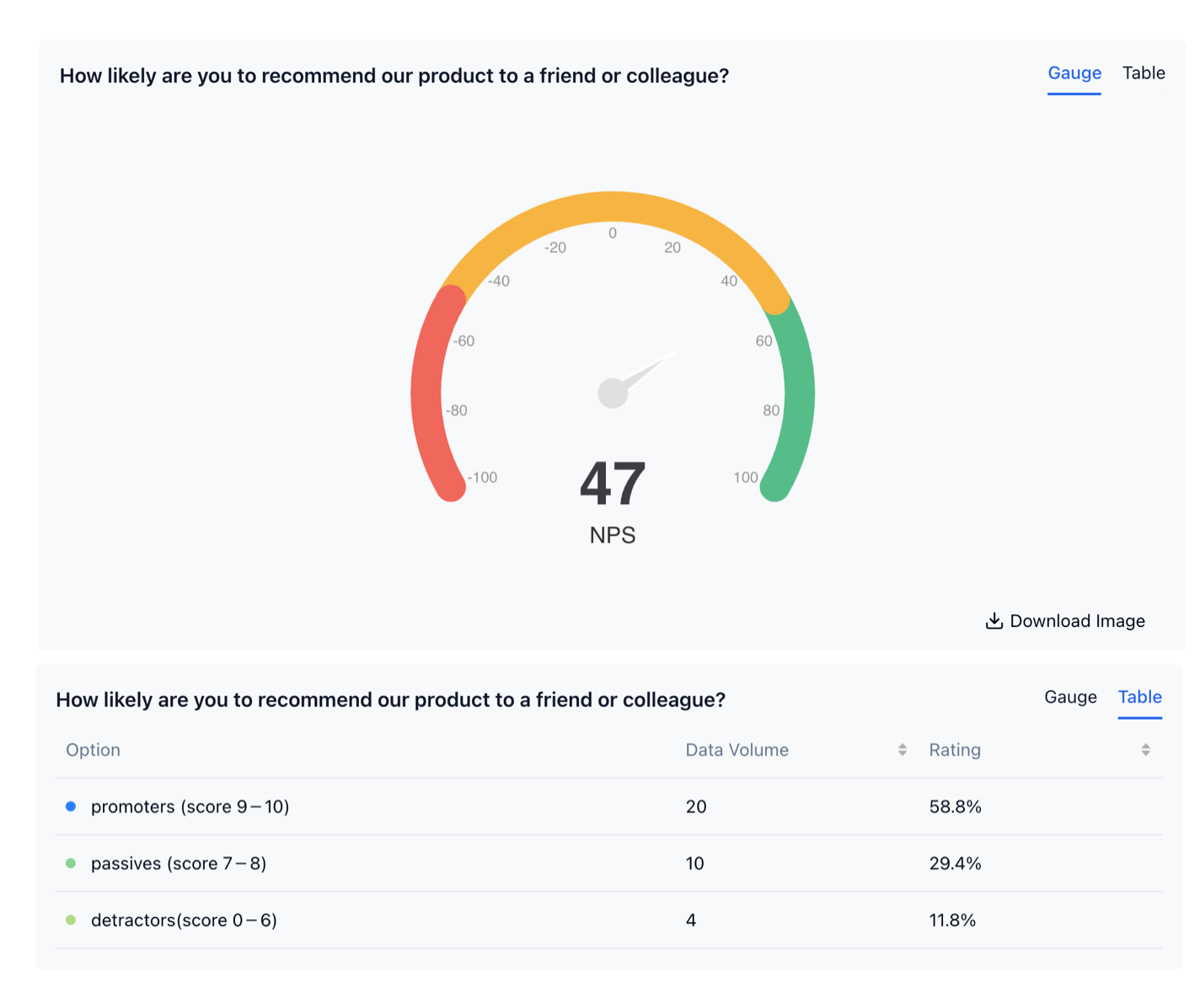
One frustrated comment is worth reading, but a repeated theme is worth acting on. Group responses by topic: unclear instructions, fast pacing, low confidence, too much workload, not enough examples, or feedback delays.
Compare scale scores with open-ended answers
Scores show where the issue is. Open-ended answers show what caused it. If “feedback helps me improve” scores low, read the text answers before changing your feedback process.
Track change over time
Student perception surveys are most useful when repeated. A short monthly survey can show whether a change improved clarity, workload, or belonging. A single end-of-course survey often arrives too late to help the students who gave the feedback.
Protect anonymity when the topic is sensitive
Students are more honest when they trust the process. If you ask about belonging, fairness, instructor support, or safety, explain whether the survey is anonymous and how the feedback will be used.
How to Build a Student Perception Survey in FormHug
Step 1: Choose the survey cadence
Use a short recurring survey for active course improvement. Use a longer survey at the end of a course, program, or semester. The recurring version should take under 3 minutes.
Step 2: Generate the first draft with AI
Open FormHug and prompt: “Create an anonymous student perception survey with 5-point agreement scale questions about teaching clarity, feedback, classroom climate, workload, and learning confidence, plus two open-ended questions.”
Step 3: Add conditional follow-ups
If a student gives a low score for workload or clarity, show a follow-up asking what felt unclear or overloaded. If a student gives a high score, ask what worked well so you can repeat it. FormHug’s conditional logic keeps those follow-ups relevant.
Step 4: Share results in a way that builds trust
After reviewing responses, tell students one or two things you are changing. The fastest way to improve response quality is to show that previous feedback mattered.
For broader feedback workflows, see how to create an evaluation form. For scored learning checks, pair perception data with mini exams or an online quiz.
Frequently Asked Questions
What is a student perception survey?
A student perception survey asks students how they experience teaching, feedback, workload, classroom climate, and learning support. It measures learning conditions rather than test performance.
What questions should I ask in a student perception survey?
Ask about teaching clarity, feedback quality, workload, pacing, classroom belonging, participation, and learning confidence. Include one or two open-ended questions so students can explain the ratings.
Should student perception surveys be anonymous?
For most perception surveys, yes. Anonymity improves honesty, especially when asking about instructor support, classroom climate, fairness, or comfort asking questions.
How often should I run a student perception survey?
Use short perception surveys monthly or after major course units. End-of-course surveys are useful for future planning, but recurring surveys are more useful for improving the current class.
Are student perception surveys valid?
They are valid for understanding student experience, not for measuring learning outcomes by themselves. Pair perception data with quizzes, assignments, attendance, and performance data for a fuller picture.
Can FormHug create student perception surveys?
Yes. FormHug can generate the survey with AI, collect anonymous responses, use scale and open-ended fields, and show conditional follow-ups based on low or high scores.
Related
- Likert Scale Survey Questions - write better agreement and confidence scales for student feedback
- Open-Ended Survey Questions - collect specific student comments without vague text boxes
- How to Create an Evaluation Form - design feedback forms that generate actionable evidence
- How to Create a Mini Exam Online - pair student perception data with scored knowledge checks
Students usually know where learning is getting stuck before the final grade reveals it. Ask early, ask specifically, and show what changed. Create your survey ->

Written by
FormHug TeamProduct, research, and form automation team
The FormHug Team brings together product builders, workflow researchers, and form automation practitioners who study how people collect, route, and act on information online. Our guides are based on hands-on product testing, template analysis, customer workflow patterns, and deep experience with forms, surveys, quizzes, AI-assisted creation, integrations, and results sharing.