

When to Use Slack
Slack is useful when submissions need fast attention, routing, or team discussion.- New lead alerts: notify a sales or growth channel when someone submits a demo request, partner inquiry, or waitlist signup.
- Support and operations intake: send bug reports, account requests, or internal tickets to the team that handles them.
- Event and booking updates: alert organizers when a registration, RSVP, booking, or cancellation arrives.
- Payment or order monitoring: notify finance or fulfillment teammates when paid submissions need review.
- High-priority form responses: route important submissions to a specific teammate by direct message.
- Team visibility: keep a shared channel updated so teammates can react, assign owners, or follow up from Slack.
Before You Start
Make sure you have:- A FormHug form that is ready to collect submissions
- Access to the Slack workspace you want to connect
- Permission to install or authorize apps in that Slack workspace
- A target Slack channel or user for the messages
- A message format that includes the fields your team needs for follow-up
Slack workspace admins may restrict who can install apps or grant app permissions. If authorization is blocked, ask a Slack admin to approve the FormHug app.
Connect Slack
Open the form you want to connect, then go to Settings -> Integrations and choose Slack.1
Start the Slack connection
Click Connect Slack.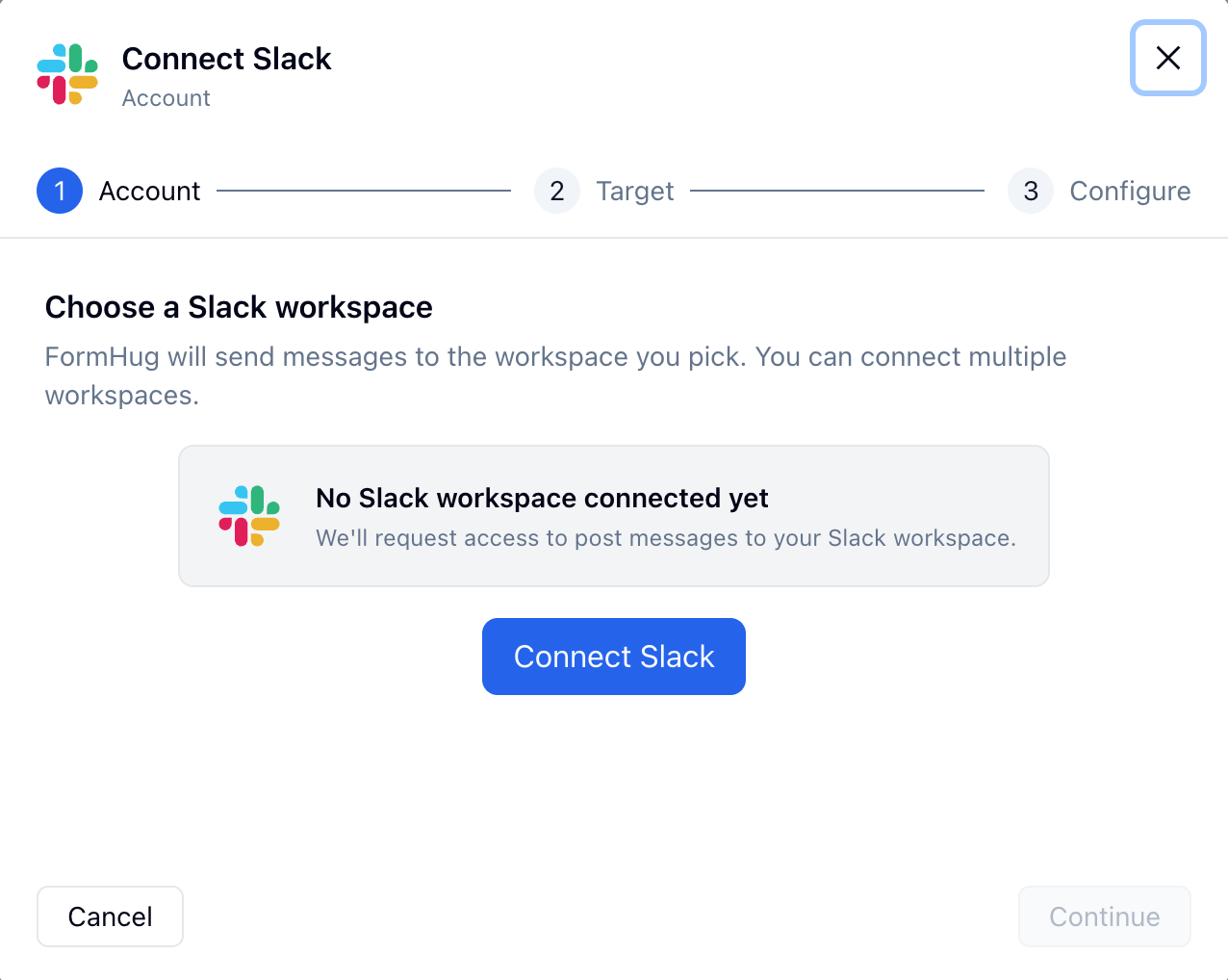
2
Authorize FormHug in Slack
Slack opens an authorization screen. Choose the workspace, review the requested permissions, then click Allow.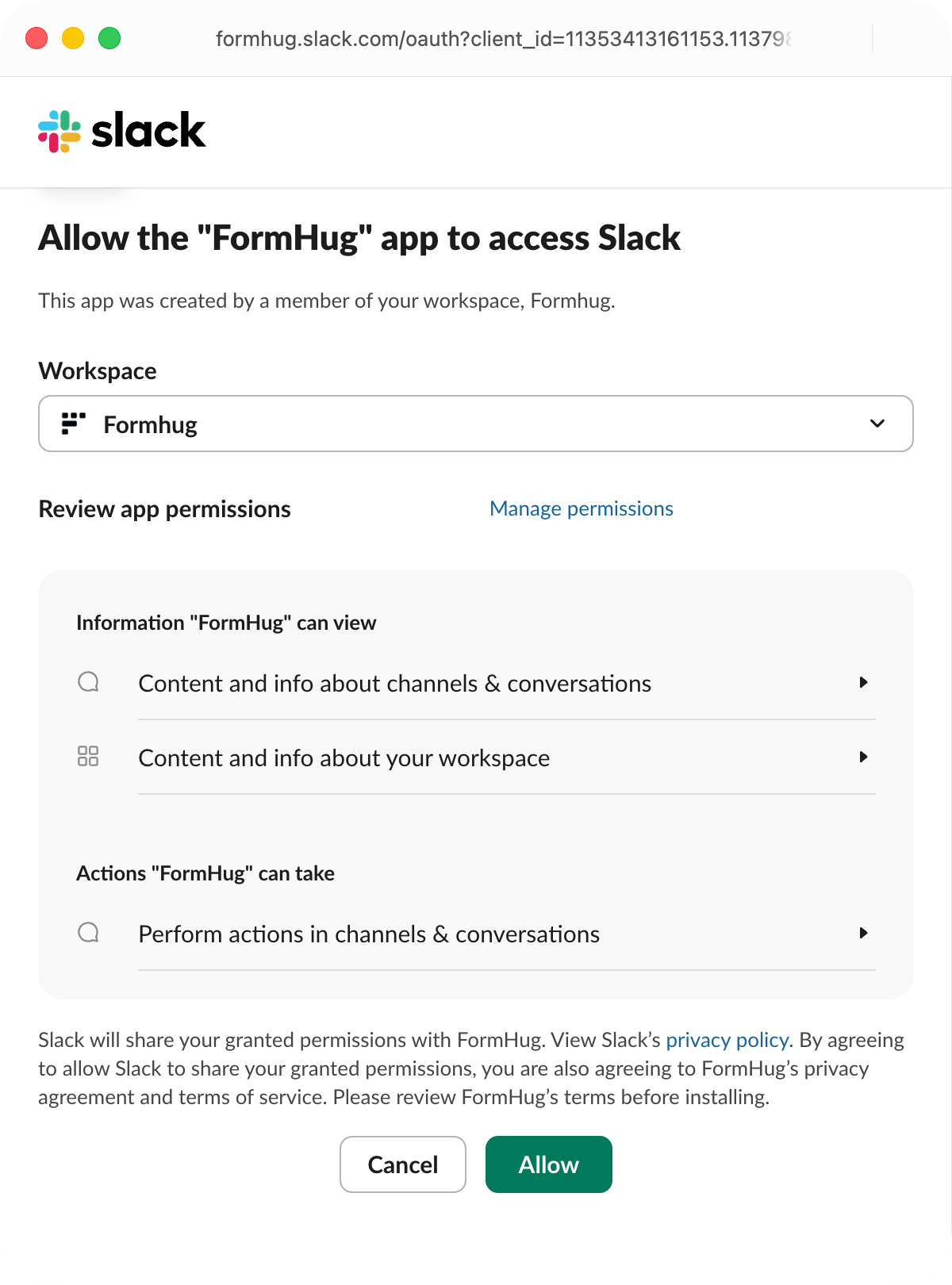
Choose a Message Target
After connecting Slack, choose where FormHug should post messages.Send to a Channel
Choose Channel, search for the channel, select it, then click Continue.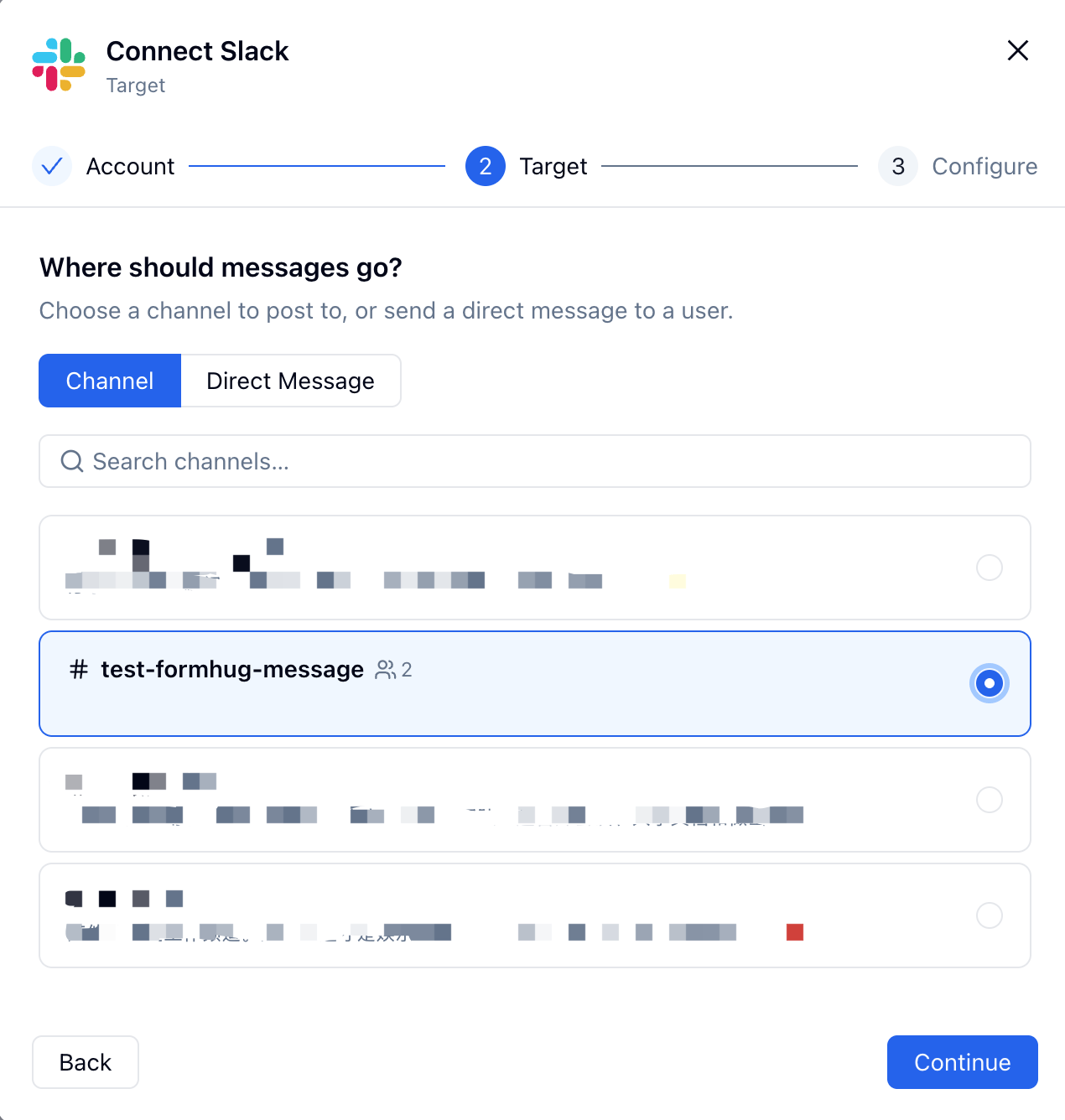
Send a Direct Message
Choose Direct Message, search for a user, select the recipient, then click Continue.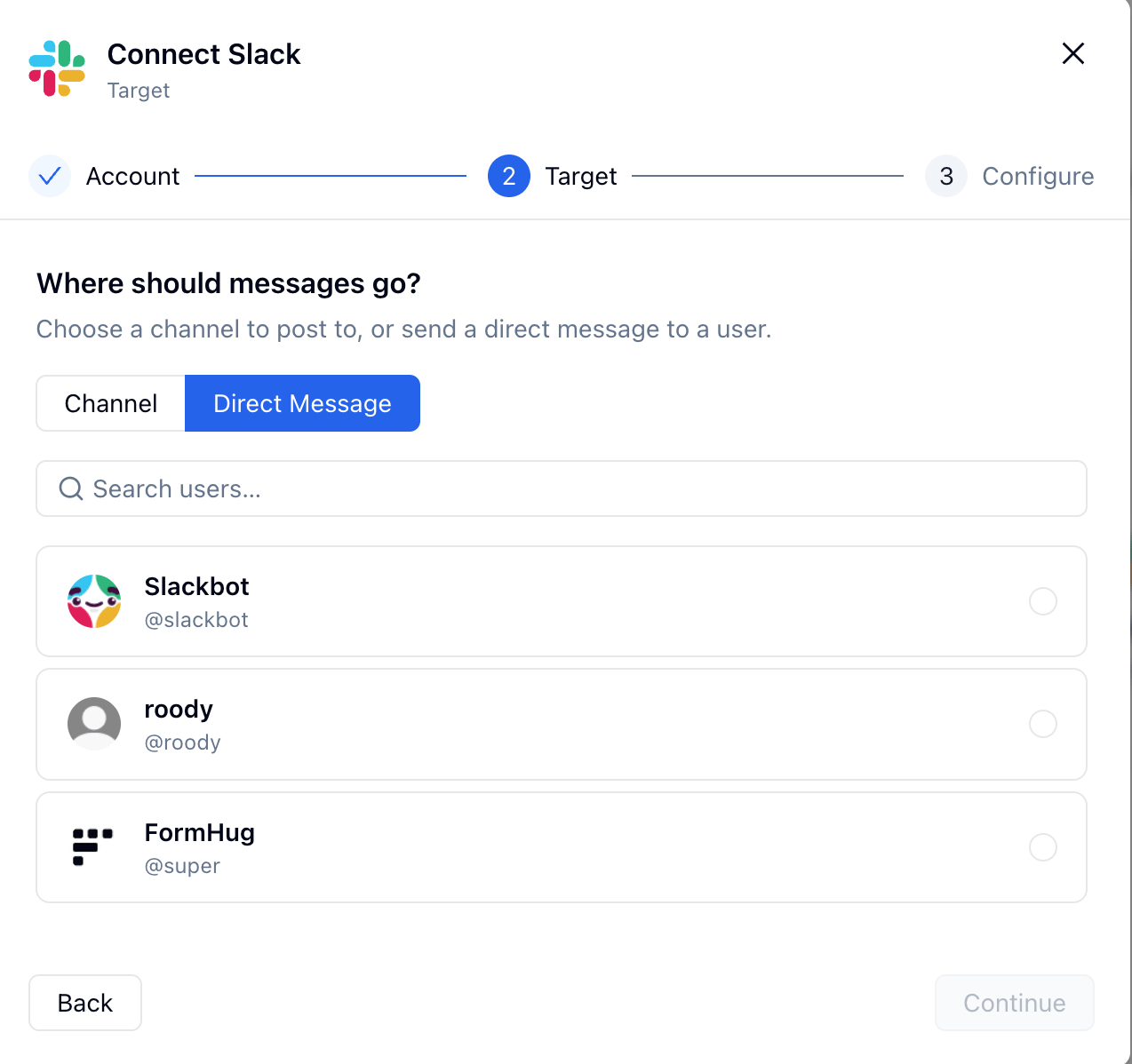
Configure the Message
Choose which submission events should trigger a Slack message, then write the message text.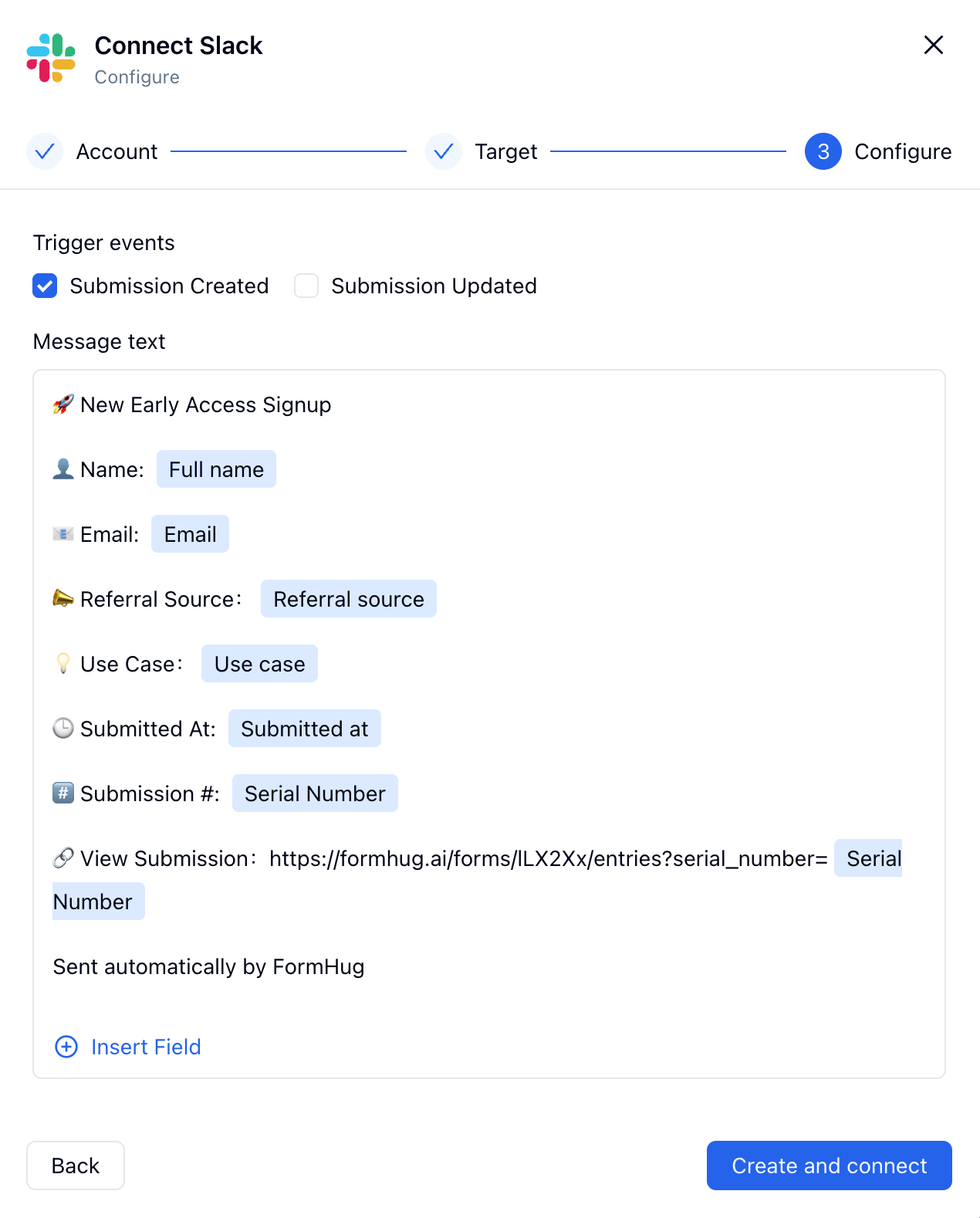
Trigger Events
Select one or both events:Message Text
Use Insert Field to add FormHug fields to the Slack message. You can include:- Submitter name and contact details
- Answers that help your team qualify or route the submission
- Submitted time
- Submission serial number
- A link back to the FormHug entry
- Static text, labels, and formatting your team recognizes
Manage the Slack Connection
After setup, the Slack connection appears in My connections on the Integrations page.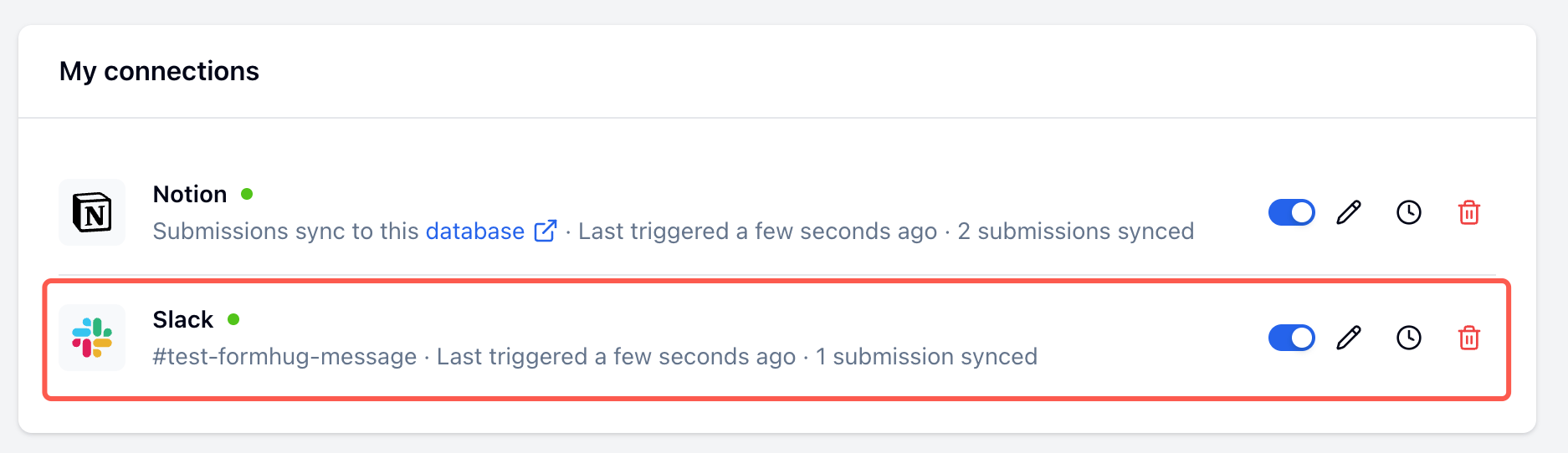
Check Event Logs
Use the event logs to confirm whether Slack messages were delivered successfully or to troubleshoot failed deliveries.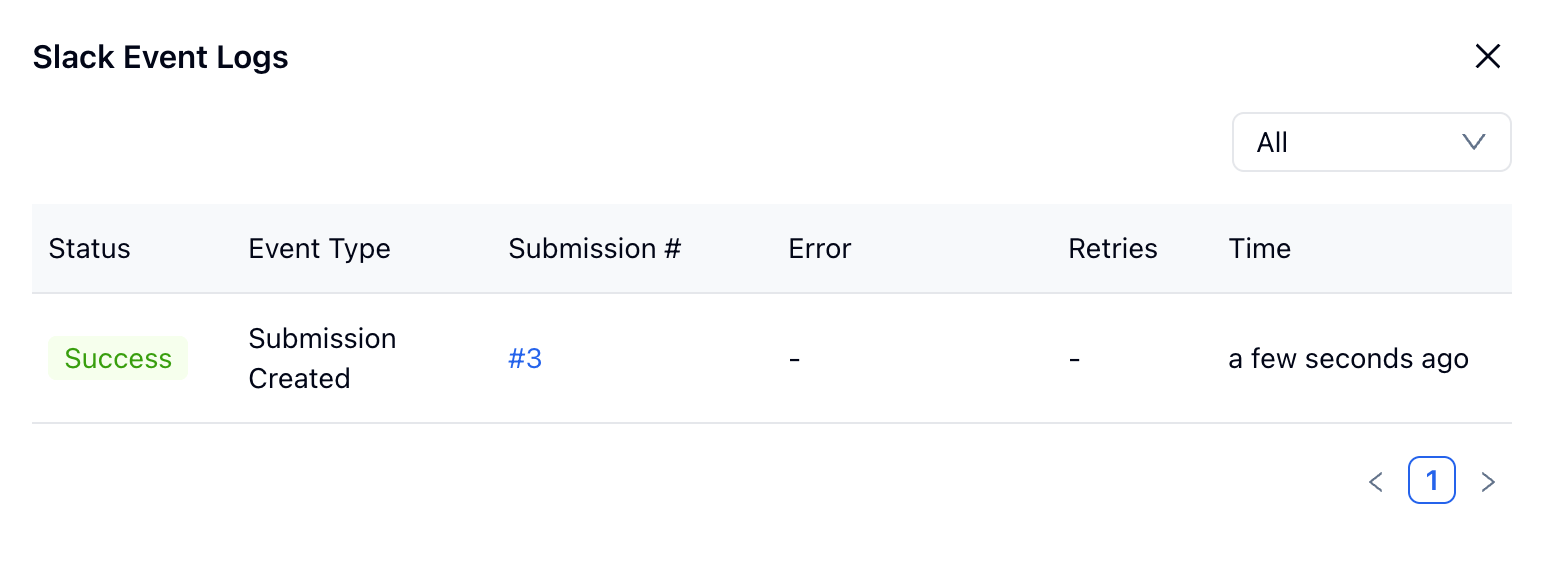
Check the Slack Message
Submit a test entry after creating the connection. Then open the target Slack channel or direct message and confirm that the message appears.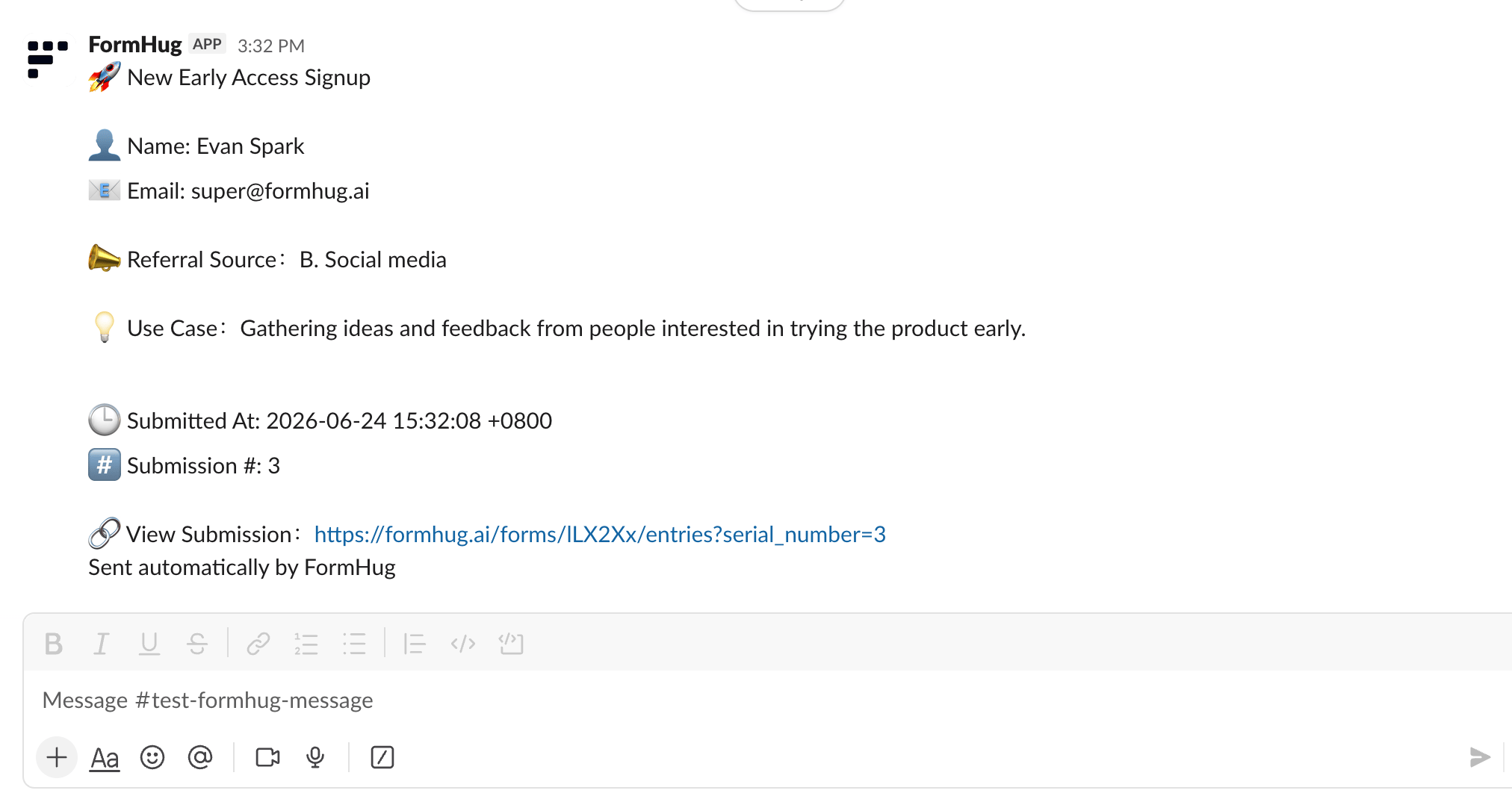
Limitations
- The integration sends messages for new events after the connection is created.
- Changes made in Slack do not update the original FormHug submission.
- If you rename channels, remove users, or change Slack app permissions, review the connection in FormHug.
- If a Slack workspace admin removes or restricts the FormHug app, messages may stop until the app is authorized again.
- Message links back to FormHug require the viewer to have permission to access the form or submission.
Troubleshooting
For more detail about Slack app authorization and message posting, see Slack’s guides to installing with OAuth and sending messages.
Related
Google Sheets
Sync submissions to a spreadsheet automatically
Notion
Create Notion database pages from form submissions
Webhooks
Push submission data to your own HTTP endpoint
Zapier
Automate workflows across CRM, email, and productivity apps
Submissions
View and manage all entries in FormHug